REVIEW · SEATTLE
Seattle Showdown Scavenger Hunt
Book on Viator →Operated by Alley Kat Adventures · Bookable on Viator
If you like your sightseeing with a twist, this is for you. Alley Kat Adventures runs a creative, nontraditional scavenger hunt in Seattle where you start at a local favorite, get your quest by mobile ticket, and then head out on your own to solve clues across town. A live, remote host stays in the loop, cheering you on and helping you when you hit a snag.
I especially like the interactive setup: you’ll text photos back to your host and document your progress while you tackle wacky challenges. I also like the Seattle landmark mix—you’re not just walking a museum hallway; you’re bouncing between famous stops and normal streets where you can chat with locals to move forward. One thing to consider: the hunt is remotely hosted, so you must have a correct, working domestic phone number and a fully charged smart phone with GPS plus the ability to send/receive data, photos, videos, and texts.
In This Review
- What makes it fun, and what might slow you down
- Key things I’d plan around
- Entering the game: how the Seattle hunt actually works
- Starting at Starbucks Reserve Roastery on Pike Street
- Stop 1: The Gum Wall and the first clue moment
- Stop 2: Waterfall Garden Park for a break from the streets
- Stop 3: Pike Place Market for the big-city sensory challenge
- Stop 4: Ye Olde Curiosity Shop for the quirky indoor finish
- The remote host, photo texting, and why it feels personal
- Wacky challenges, locals, and getting outside your comfort zone
- Walking or driving between checkpoints: plan your team pace
- Tech checklist: the one requirement that can ruin your day
- Who should book Seattle Showdown
- Value: why this feels worth your time
- Quick, practical timing and planning advice
- Should you book it?
- FAQ
- How long is the Seattle Showdown scavenger hunt?
- Where does the hunt start and end?
- Is it offered in English?
- Do we need a phone to play?
- What if we have an international phone number?
- Is it okay for families or dogs?
- Can I cancel or change my booking?
What makes it fun, and what might slow you down

The format is built for movement. The game alternates between indoors and outdoors, and you can walk or drive between checkpoints, so you can keep the pace that fits your group. It’s also designed to be group-friendly, with options that make it work for families and dog owners too, not just hardcore city explorers.
Just be aware that the experience runs through your phone, and that can make or break the fun. If your tech is spotty, you may need to switch to WhatsApp or email through a message in advance.
Key things I’d plan around
- Remote host with real-time encouragement: send photos and get help while you play.
- Points race plus an international leaderboard: it turns a casual walk into a competition with bragging rights.
- A stop list that mixes famous and quirky Seattle: Gum Wall, Waterfall Garden Park, Pike Place Market, and Ye Olde Curiosity Shop.
- Indoors and outdoors in rotation: less monotony, more chances to reset.
- Bonus challenges and an option to extend for free: if you still have energy, you can keep going.
- Small group cap of 30: helps the game feel less chaotic.
Other Seattle tours we've reviewed in Seattle


Entering the game: how the Seattle hunt actually works
This isn’t a “follow the guide at a slow pace” tour. It’s a scavenger hunt where you’re actively searching, choosing routes, and solving clue steps, then proving you did it by sending photo updates.
Here’s the flow in plain terms:
- You meet at the start point and get your mobile quest.
- You leave in your own team to hit each checkpoint.
- At each stop, you solve clues and accept challenges that are written to feel playful, not homework-like.
- You message your remote host with photos and questions as you go.
- You finish back where you started, roughly about two hours later.
That remote “live” piece matters. When you’re on your own, you don’t want to get stuck wondering if you’re doing it wrong. The host can troubleshoot from afar and can nudge you back onto track. And because you’re sending photos, it feels more like co-piloting than being abandoned with instructions.
Starting at Starbucks Reserve Roastery on Pike Street
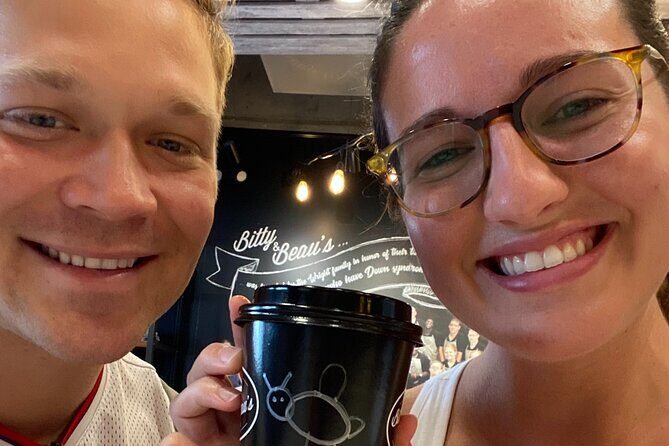
Your meeting point is Starbucks Reserve Roastery, 1124 Pike St, Seattle, WA 98101. It’s a good choice for a scavenger hunt start: it’s easy to find, lots of foot traffic means you’re not entering some dead-end corner of the city, and you can usually get your team together fast.
For your first minutes, plan for a quick warm-up:
- Make sure your team knows who’s holding the phone with the game’s GPS functions.
- Take a moment to confirm your camera works and you can upload/send images.
- Decide whether you’ll walk, drive, or mix both so your later stops don’t turn into a last-minute scramble.
Because the tour is designed to be flexible, your route decisions can affect your timing. Two hours sounds short, but you’ll lose time if you’re constantly redirecting yourselves.
Stop 1: The Gum Wall and the first clue moment
Your first checkpoint is The Gum Wall. This is one of those Seattle spots people recognize instantly, which is great for scavenger hunts. Even before you solve anything, it sets a tone: weird, memorable, and very photo-friendly.
What makes this stop work well in a game format is simple: it’s a location where you can slow down without getting bored. Your clue step likely depends on noticing details, and this is the kind of landmark where you’ll naturally look around anyway.
One realistic drawback: depending on the time of day, the area can be busy. That can make it harder to browse and take photos at your own pace. If you’re the kind of group that needs breathing room, give yourselves a little extra time for the first challenge.
Stop 2: Waterfall Garden Park for a break from the streets

Next up is Waterfall Garden Park. This stop adds variety by shifting the vibe. Instead of chasing bright storefront energy, you get a calmer environment where the hunt can feel like a stroll with purpose.
Why this matters: Seattle can be physically and mentally draining if you try to cram everything into a single walk. A mid-hunt park stop resets you. You get to stretch, re-check your map/GPS, and regroup before you head into the most crowded area on your list.
In a game like this, I also like that you’re not stuck only in one setting. Indoors-only hunts can feel samey. Alternating outdoor spaces keeps the clues from feeling repetitive.
Potential consideration: parks can mean uneven footing and areas where you’ll want decent footing for quick photo snaps. If your group includes kids or anyone with mobility needs, keep an eye on pace here.






Stop 3: Pike Place Market for the big-city sensory challenge

Your third stop is Pike Place Market. This is the heart of classic Seattle energy, and it’s a strong choice for a scavenger hunt because it’s full of activity—people watching, storefronts, and quick sightlines you can use to find clue answers.
Expect the market portion to feel more intense than the earlier checkpoints. It’s not just visual clutter; it’s also sound, smells, and crowds. That doesn’t ruin the game, but it does mean you should keep your team communication crisp.
A practical tip: if the puzzle requires searching or verifying details, choose one person to focus on reading and another to handle photos and messaging your host. That avoids the usual group problem where everyone wanders off in different directions and your team time slips.
If you get stuck in the market zone, don’t suffer in silence. The remote host is there to help, and a quick message can keep you from spending 20 minutes doing the wrong thing.
Stop 4: Ye Olde Curiosity Shop for the quirky indoor finish

The last checkpoint is Ye Olde Curiosity Shop. Ending on a quirky, indoor-feeling attraction is smart in a game format. You get a change of pace after the market bustle, and indoors tends to make certain clue types easier to handle.
Indoor stops also help if the weather turns. Seattle weather can change its mind quickly, and a shop-based finish gives you a built-in “plan B” moment even though you’re not controlling the forecast.
The main drawback to remember: indoor attractions can mean narrower spaces and more browsing. If your team likes open room to spread out, you may need to keep everyone closer together here to avoid repeating steps.
Still, this kind of ending is perfect for a hunt that’s meant to be fun, not tiring. It gives you a final round of problem-solving before you circle back to where you started.
The remote host, photo texting, and why it feels personal

This is a big part of what makes the experience click. You aren’t just solving clues in a vacuum. You’re actively texting photos to a remote host who cheers you on and can assist you.
That can be surprisingly helpful if:
- your team misreads a clue,
- you don’t know if you’re missing a step,
- you’re traveling with mixed ages or mixed confidence levels,
- or you just want encouragement so you keep going instead of giving up.
Also, photo-challenge games change the experience. You notice differently. You slow down to document the moment. You look for details because you know you’ll need to show proof.
And because it’s built around mobile communication, it can be a good fit for people who like structured fun but dislike strict pacing.
Wacky challenges, locals, and getting outside your comfort zone
The scavenger hunt includes wacky challenges and bonus challenges. It also includes an opportunity to interact with locals to solve clues. That might sound scary, but it’s usually a small, reasonable step—something like asking a question, confirming an observation, or getting the kind of small local hint you can’t Google fast enough.
I like this approach because it turns a walk around familiar streets into a story you actually participate in. It’s one of the reasons scavenger hunts can feel more “you were there” than a typical photo stop.
Of course, if your group is shy, you can still play. You’ll likely be able to solve most clue steps without deep conversation, but you’ll have that extra path if you want it.
Walking or driving between checkpoints: plan your team pace
You’ll walk or drive to move between checkpoint locations. That matters because your team’s choice will shape the whole experience.
If you’re walking:
- You’ll get a more “city game” feel.
- You’ll also stay flexible if you find an unexpected photo angle.
- But you’ll need to accept that crowds and intersections add time.
If you drive:
- You can protect your schedule if you’re trying to hit every checkpoint within the two-hour window.
- But you’ll want to keep your phone available and your team together, since the hunt is still about finding clue locations, not simply arriving.
Either way, keep at least one smart phone on the team charged and ready. The game depends on working GPS and on your ability to send and receive data plus media.
Tech checklist: the one requirement that can ruin your day
This is the part you should take seriously. The hunt is remotely hosted, so you must provide a correct, working, domestic phone number when you book. Each team must bring at least one fully charged smart phone with GPS and the ability to send and receive data, photos, videos, and text messages.
If you have an international phone number or run into technical difficulties, you can complete the game using WhatsApp or email. You can set this up by messaging the operator in advance through a Viator message.
This isn’t just a fine print detail. It’s the difference between a smooth, cheerful game and a frustrating scramble. If you’re traveling with one phone that’s old, low battery, or spotty on signal, fix that before you arrive.
Who should book Seattle Showdown
This is a strong pick if any of these fit you:
- You’re in Seattle for a short window and want more action than a standard guided stroll.
- You’re traveling as a group that likes to laugh and solve things together.
- You want an activity that works for mixed ages, since the game alternates between indoors and outdoors.
- You like friendly competition, since you play for points on an international leaderboard.
- You want a “do it your way” experience where your team can set the tempo.
It’s also described as family and dog friendly, so if your group includes a dog, you’re not the odd one out. Just keep in mind that your real-world experience depends on your comfort with crowds and walking inside busy market streets.
If you’re the type who wants guided explanations at every stop, this might feel hands-off. But if you like stories you build yourself through clues, it’s a good match.
Value: why this feels worth your time
Two hours is a sweet spot. It’s long enough to feel like you actually did something, but short enough that you can pair it with a meal or another activity the same day.
The value comes from the combo of:
- real Seattle stops people recognize,
- playful challenge design,
- a remote host who keeps you from getting stuck,
- and a competitive leaderboard that turns “a fun afternoon” into a goal.
Also, there’s an option to extend the hunt for free. That matters if you end early or if your team gets into the game and wants more of it.
Quick, practical timing and planning advice
To make the most of the two-hour window, I’d do this:
- Arrive a few minutes early at Starbucks Reserve Roastery so your team starts with momentum.
- Choose one person to handle messaging and photo sending.
- Keep your group together at crowded checkpoints like Pike Place Market.
- Use the host when you’re unsure. Don’t burn time guessing.
And if you’re traveling as a group, agree on what “we’re done” means. Some teams love racing to maximize points; others just want to finish and enjoy photos. You’ll have a smoother run if you pick your priority early.
Should you book it?
I’d book Seattle Showdown if you want a structured, playful way to see the city without a rigid tour script. The remote host support and photo-based challenges make it more engaging than a DIY walk, and the mix of Gum Wall, Waterfall Garden Park, Pike Place Market, and Ye Olde Curiosity Shop keeps things varied.
Skip it (or at least rethink it) if you know your group can’t handle phone-based gameplay, or if you’d struggle with the tech requirement of a working domestic number and a fully capable smartphone. If you can handle that, you’ll likely come away with a day that feels like more than sightseeing.
FAQ
How long is the Seattle Showdown scavenger hunt?
It runs for about 2 hours.
Where does the hunt start and end?
It starts at Starbucks Reserve Roastery at 1124 Pike St, Seattle, WA 98101 and ends back at the meeting point.
Is it offered in English?
Yes, it’s offered in English.
Do we need a phone to play?
Yes. Each team must bring at least one fully charged smart phone with GPS and the ability to send and receive data, photos, videos, and text messages.
What if we have an international phone number?
If you have an international phone number or face technical issues, you can complete the game using WhatsApp or email. You’ll need to arrange this by messaging in advance.
Is it okay for families or dogs?
It’s described as family and dog friendly.
Can I cancel or change my booking?
This experience is non-refundable and cannot be changed for any reason.