REVIEW · NATIONAL PARKS
Small-group Mt. St. Helen National Park Tour from Seattle in SUV
Book on Viator →Operated by BARBIL TOURS · Bookable on Viator
A volcano day with a human-sized group.
This Mt. St. Helens tour from Seattle keeps things practical: you get SUV pickup and drop-off, and you pack in the key learning stops plus short walks without trying to drive the whole day yourself. I also love the small group (max 5) feel—so the guide can actually shape the pace around your needs, like they did for mobility challenges with guides such as Gurmit Singh.
One consideration: it’s a long day with driving time (about 8 to 10 hours total), and weather matters—if conditions aren’t right, your day may change or be refunded.
In This Review
- Key highlights I’d bank on
- Why a small-group SUV tour works so well here
- Pickup and timing: the 8–10 hour rhythm
- Mount St. Helens Visitor Center: the seismograph and the timeline you can’t replicate on your own
- Coldwater Ridge Visitor Center: free entry, big views, and an easy break
- Eruption Trail from Johnston Ridge: a short, paved hike with 360-degree views
- Coldwater Lake: the calm ending, plus the wristband detail
- Guides, driving style, and what to expect from the small group
- Price and value: $375 for a full-day “learn + view” package
- Who should book this Mt. St. Helens day trip?
- Should you book?
- FAQ
- How many people are in the group?
- How long is the Mt. St. Helens tour from Seattle?
- Is pickup offered from the Seattle area?
- What are the main stops during the day?
- Is admission included anywhere?
- How long is the Eruption Trail hike?
- Are boats allowed on Coldwater Lake?
- What happens if weather is bad?
- Is the tour offered in English?
Key highlights I’d bank on
- Max 5 travelers in an SUV for a more personal, flexible feel
- Mount St. Helens Visitor Center includes an admission stop with seismograph + May 18, 1980 timeline
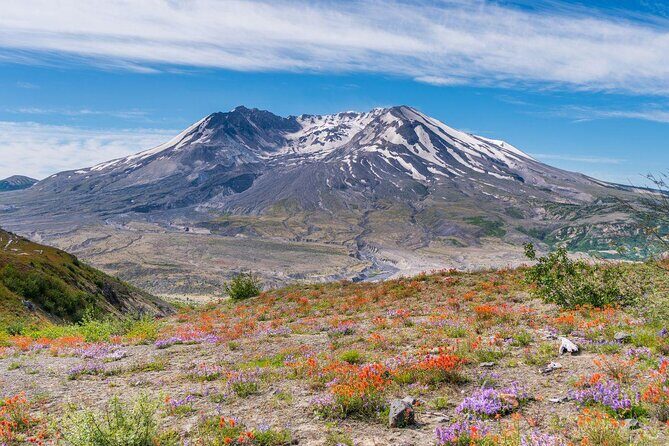
- Eruption Trail is barrier-free, paved, and under a mile with 360-degree views
- Coldwater Ridge Visitor Center is a free stop with big sightlines and easy access to Coldwater Lake
- Coldwater Lake adds a calmer finish, plus a wristband detail for trails inside the monument
Why a small-group SUV tour works so well here
Mt. St. Helens isn’t a “wander all day on your own” kind of day unless you love early departures, complicated driving, and constantly checking where you can park. This setup fixes the big pain point: you’re shuttled in an SUV with pickup options around Seattle, then returned to your starting spot at the end.
With a maximum of 5 travelers, you usually get a more conversational ride. That matters because the area is best understood with context—how the terrain changed, why viewpoints are where they are, and what you’re actually seeing from each stop. Many tours out there feel like a checklist; this one feels more like guided wayfinding.
That said, the tradeoff for the smaller group is that you’re still committing to a full day. You’ll spend a good chunk of your time on the road before you’re standing in front of the crater views.
Other Seattle tours we've reviewed in Seattle



Pickup and timing: the 8–10 hour rhythm
Plan for a full-day outing, roughly 8 to 10 hours total. The drive segments are a real part of the experience here, not just dead time. You’re headed out of Seattle toward the monument area, and the first learning stop happens after a while.
A typical early anchor is the Mount St. Helens Visitor Center area, which includes about 3 hours of driving time from pickup locations. That long start makes sense: you want to arrive when you can still comfortably fit the museum-style learning, then move into the shorter hikes and viewpoint time.
Each stop is paced with travel time built in. After the Eruption Trail, you’ll head back with about 3 hours drive time to drop-off.
If you’re the kind of person who needs frequent restroom breaks, you’ll feel better if you time your water and snacks around each visitor center stop—because once you’re between them, options can be limited.
Mount St. Helens Visitor Center: the seismograph and the timeline you can’t replicate on your own
This is the “learn first, look second” part of the day—and it’s worth treating as more than a quick photo stop. Expect an immersive mix of indoor exhibits and an easy outdoor walk.
Inside, you’ll see:
- A large, step-in model of the volcano
- Life-size mannequins that help put the scale of the 1980 eruption into perspective
- A functioning seismograph plus a live feed showing current seismic activity
- A chronological timeline leading up to the May 18, 1980 blast
There’s also a theater program offered twice an hour, at :05 and :35 after the hour. That timing detail is handy—if you arrive near one of those starts, you can slot it in without feeling rushed.
Then you can walk outside on Silver Lake, about 0.6 miles round-trip (the trail is described as 0.6 miles). It includes boardwalk sections over wetlands, so you’re not just walking through a normal trail; you’re filtering sightlines through wetland edges. Depending on the season, you may spot aquatic plants and migratory waterfowl at different times of year.
Admission is included at this stop. I like that: it keeps the day from turning into surprise add-ons.
Possible drawback? The value here is the indoor-and-kiosk learning. If you’re mainly chasing views and hate museum-style stops, you might want to mentally shift your expectations before you arrive.
Coldwater Ridge Visitor Center: free entry, big views, and an easy break
Next you’ll swing by Coldwater Ridge Visitor Center, which is free. It sits within the Mount St. Helens National Volcanic Monument and offers a straightforward “look out, orient yourself” moment.
It’s located along State Hwy 504, around 45 miles east of I-5, and it was built in 1993. The center spans just over 24,600 sq. ft. across two floors, so it’s big enough to feel like you’re stepping into a real facility rather than just a roadside stop.
The practical perks:
- Fantastic views of Mount St. Helens
- Close access to Coldwater Lake
- Access to picnic areas, trails, restrooms, and parking
Boats come up here too: the info you’ll run into includes a boat launch for non-motorized or electric motor options. That’s a nice reminder that Coldwater Lake is more about quiet time than power boating.
This stop is about an hour, so it’s not a huge time sink. I like it because it gives you both context and a breather before your short, higher-impact viewing hike.
Eruption Trail from Johnston Ridge: a short, paved hike with 360-degree views
If there’s one part of the day you should plan around, it’s the Eruption Trail. This is the “stand here, look around, feel small” segment—without needing a long hike.
The hike is:
- Barrier-free and paved
- Less than one mile
- Equipped with interpretive kiosks
- Designed for 360 views of Mount St. Helens and the blast zone
It starts from the Johnston Ridge Observatory area. You’re not going far, but you’re going high enough (in terms of viewpoint) that the blast zone becomes legible. The kiosks are key. Without them, you’ll mostly see big, confusing devastation. With them, you can start matching shape and debris patterns to what you learned earlier in the day.
Admission is included at this stop.
One note to take seriously: a few people have said the best crater-view experience can depend on accessibility and what parts are reachable. This trail itself is described as barrier-free and paved, which is a plus, but your exact sightline time can still vary with conditions and what’s open.
After this, the tour turns back toward Seattle for the remaining drive time.






Coldwater Lake: the calm ending, plus the wristband detail
By the time you reach Coldwater Lake, you’re ready for something less intense. This part of the day is a side-trip that’s designed to give you a scenic payoff without another big hike.
Coldwater Lake was formed by an avalanche during the volcano’s eruption. You’ll park nearby with access paths to the lake, restrooms, and walking trails. There’s also a boat launch where electric motors only are allowed.
Here’s a detail I’d treat as essential: some trails around Coldwater Lake inside the monument may require a wristband as proof you paid to visit or hike in the monument area. You’ll be told not to throw away the wristband. That matters because it’s easy to set it aside without thinking and then later need it for entry to certain paths.
Time-wise, it’s about an hour. That’s enough for a slow look, some photos, and a gentle walk—ideal as a reset before the long ride home.
Guides, driving style, and what to expect from the small group
Guide quality can make or break a day like this, and the good signs show up in the names people were with. Some tours have been led by local guides such as Gurmit Singh, Paul, Chad, Dwight, and Mike. Across those reports, the common theme is that the guide doesn’t just point—you’re given context, and they answer questions as you go.
I also like that the setup supports different comfort needs. One standout detail from the feedback: a guide worked well with a dad who had mobility issues at the time. That lines up with why this tour includes paved, shorter walking options like the Eruption Trail.
Driving style is the only part that deserves attention. A couple of people felt the driving wasn’t their favorite. Since you’ll be in an SUV for long stretches, if you’re sensitive to motion or tight turns, consider bringing something that helps you feel settled (like a calm playlist and a comfortable seat position).
Price and value: $375 for a full-day “learn + view” package
At $375 per person, this isn’t a budget outing. But it can be fair value depending on what you’re trying to avoid.
For that price, you’re getting:
- Pickup and drop-off in the Seattle area
- A small group (max 5) rather than a big bus
- Entry coverage where it’s listed: Mount St. Helens Visitor Center and the Eruption Trail stop both include admissions
- A day plan that stitches together viewpoints and learning stops without you micromanaging routes
If you were to rent a car, buy separate tickets, and drive yourself, you’d be paying for time and stress as much as money. This tour converts that into a set route with transportation handled.
One caution: a few people mentioned confusion around pricing when a minimum number of travelers wasn’t met, or when the tour was described in a way that didn’t match what they paid for. I’d recommend you confirm what you’re booked under (group size expectations) before you go, so there aren’t surprises about how pricing changes if the group composition shifts.
Also, weather is a factor. If conditions are poor and the tour needs to be adjusted, you’ll want to check that the provider is planning around that so you’re not stuck in a half-day compromise.
Who should book this Mt. St. Helens day trip?
This is a great fit if:
- You want Johnston Ridge area viewpoints without self-driving logistics
- You like learning through exhibits like the seismograph and the 1980 timeline
- You prefer short walks—especially the paved, barrier-free Eruption Trail
- You’re traveling in a group size that benefits from a max 5 vibe
It may be less ideal if:
- You only want crater photos and hate visitor-center learning
- You’re very weather-dependent and can’t be flexible with rescheduling
- You’re extremely motion-sensitive during long drives
Should you book?
I think you should book if you want a structured, small-group volcano day that teaches you what you’re seeing and still gives you time for short, high-reward views. The mix of seismograph learning, paved Eruption Trail viewing, and the calm close at Coldwater Lake is a strong recipe for a memorable day.
If you want maximum crater-view time and minimal stops, you may find the balance is more educational than purely panoramic. And if you’re the type who gets nervous about long drives, plan to bring comfort items and be ready for a full day.
If your main goal is to see Mount St. Helens without the hassle of route planning, this tour is a very sensible way to do it.
FAQ
How many people are in the group?
The tour has a maximum of 5 travelers, which keeps the experience small-group sized.
How long is the Mt. St. Helens tour from Seattle?
It’s listed as about 8 to 10 hours.
Is pickup offered from the Seattle area?
Yes. Pickup is offered, and you’ll get a text message with the approximate pickup location and time. You can also request additional locations if needed.
What are the main stops during the day?
You’ll visit the Mount St. Helens Visitor Center, Coldwater Ridge Visitor Center, walk the Eruption Trail, and take a side-trip to Coldwater Lake.
Is admission included anywhere?
Admission is included at the Mount St. Helens Visitor Center stop and the Eruption Trail stop. Coldwater Ridge Visitor Center is free, and Coldwater Lake is free as part of the side-trip.
How long is the Eruption Trail hike?
It’s described as a barrier-free, paved hike of less than one mile, with 360-degree views and interpretive kiosks.
Are boats allowed on Coldwater Lake?
A boat launch is available. The information provided notes electric motors only, and at Coldwater Ridge Visitor Center there’s also mention of non-motorized or electric motor options.
What happens if weather is bad?
The experience requires good weather. If it’s canceled due to poor weather, you’ll be offered a different date or a full refund.
Is the tour offered in English?
Yes, the tour is offered in English.