REVIEW · WALKING TOURS
Seattle: Terrors and Ghosts Guided Walking Tour
Book on GetYourGuide →Operated by US Ghost Adventures · Bookable on GetYourGuide
Lanterns, legends, and downtown shadows. This is a guided haunted walk through Seattle’s older, weirder corners, with stops tied to places like the Suquamish Burial Grounds and the Northwest’s first corpse elevator. The guide is a local haunted-history expert, and the stories stay grounded in the gritty past of the area, not just jump-scares.
I especially like how the tour threads together famous spots like Post Alley and the Gum Wall with lesser-known sites such as the Butterworth Building. I also like the human touch: the best guides keep the group engaged and call out interesting details you’d miss walking by on your own. One possible drawback: the route includes hills and uneven ground, so if you struggle on slopes, plan carefully.
In This Review
- Key Highlights You’ll Actually Care About
- First Stop: Four Seasons Hotel Meets the Lantern
- How the 1.5-Hour Walk Packs a Lot Into Downtown
- Union Street Story Beats: When Seattle’s Streets Turn Personal
- Post Alley and the Gum Wall: The Spooky Side of a Normal Walk
- Butterworth Building: Unsettling Details You Can Point To
- Market Theater: Seattle Entertainment with a Shadow
- Suquamish Burial Grounds and the Corpse Elevator Stop
- What You Really Get: Storytelling That Teaches City Patterns
- Price at $27: When This Tour Feels Like a Bargain
- Guide Styles: Lantern Energy, Acting Voices, and Real Engagement
- Who Should Take This Seattle Haunted Walk
- Should You Book the Seattle Terrors and Ghosts Tour?
- FAQ
- Where does the Seattle Terrors and Ghosts tour start?
- How long is the tour?
- What does the guide wear, and how will I recognize them?
- Is the tour family friendly?
- What should I bring?
- What items are not allowed?
- Is it wheelchair accessible?
- What is the cancellation policy?
Key Highlights You’ll Actually Care About
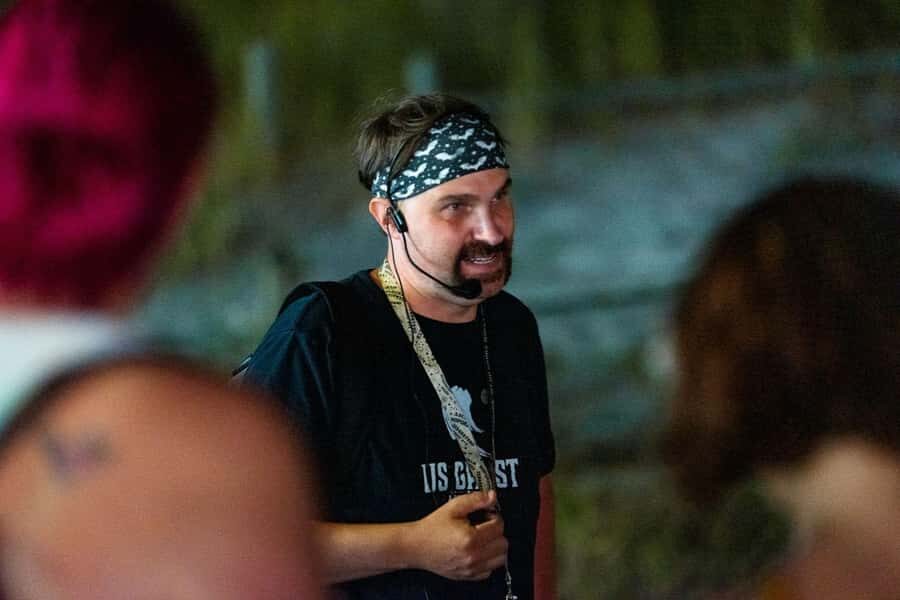
- Start on Union Street at the Four Seasons Hotel, where the guide shows up in a black US Ghost Adventures shirt and carries a lantern
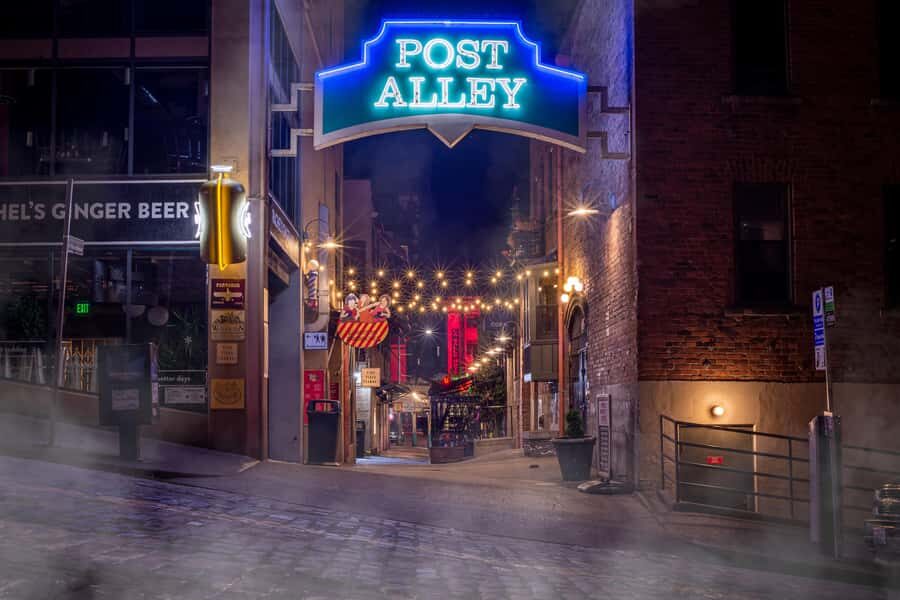
- Post Alley + the Gum Wall are treated like story magnets, not just photo spots
- Butterworth Building gets serious, unsettling backstory at the street level
- Market Theater ties Seattle’s entertainment past to darker rumors
- Suquamish Burial Grounds + the corpse elevator site are the tour’s most haunting stops
- Many guides use acting-style storytelling, with voice and expression shifts that make the walk feel alive
First Stop: Four Seasons Hotel Meets the Lantern
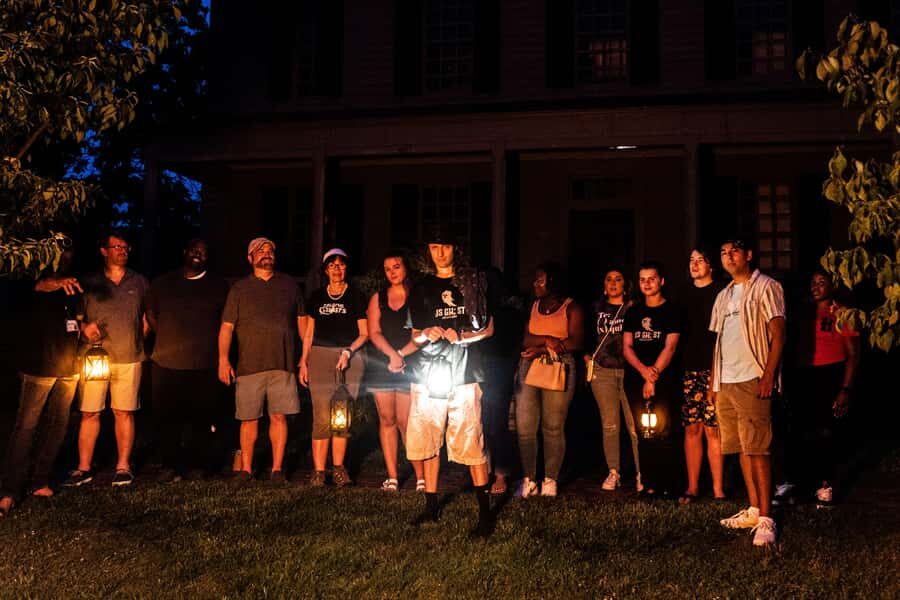
Your night starts at the Four Seasons Hotel, 99 Union Street (right in downtown Seattle). The guide meets you there wearing a black US Ghost Adventures T-shirt and carrying a lantern, which instantly sets the tone. Arrive about 15 minutes early so you can find the group and get moving before the street fills in.
This is a walking tour with a very specific vibe: street-by-street storytelling. You’re not in a theater. You’re on real sidewalks looking at real buildings, some of which have held the city together through changes, disasters, and business cycles. That’s part of what makes the stories land. You can point at an entrance, a back street, or a narrow alley and think, sure, history happened here.
The tour is designed for rain or shine, so you’ll want weather clothing you can walk in for 90 minutes. Shoes matter too—this isn’t a casual “museum pace” stroll the whole way.
Other Seattle tours we've reviewed in Seattle


How the 1.5-Hour Walk Packs a Lot Into Downtown
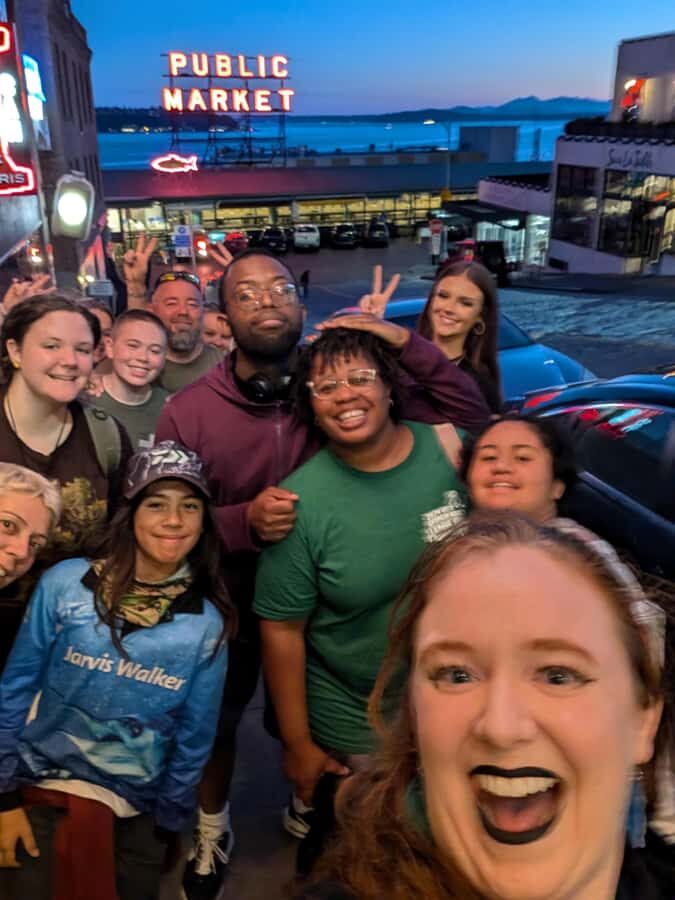
The tour is listed at 1.5 hours (and it’s described as a professional guided experience with a planned route back to the meeting point). That time box is important. It means you’ll hit multiple stops without the lag that turns a fun walk into a long slog.
There’s also an item that surprises people: you’ll go through an express security check to skip extra waiting. In plain terms, it helps you start sooner, which matters because Seattle nights can move fast once it’s dark and damp.
Group pacing is usually the biggest make-or-break factor in a walking ghost tour. The stories are the point, but you still need a guide who can keep attention while managing the group at each street corner. The guide-led approach is also why the tour tends to feel more personal—when the guide calls out details, you start seeing shapes and patterns in the scenery that you’d otherwise ignore.
If you’re the sort who likes a “walk with commentary” more than a nonstop scare-fest, this format fits well. It’s spooky, but it’s still a city tour.
Union Street Story Beats: When Seattle’s Streets Turn Personal
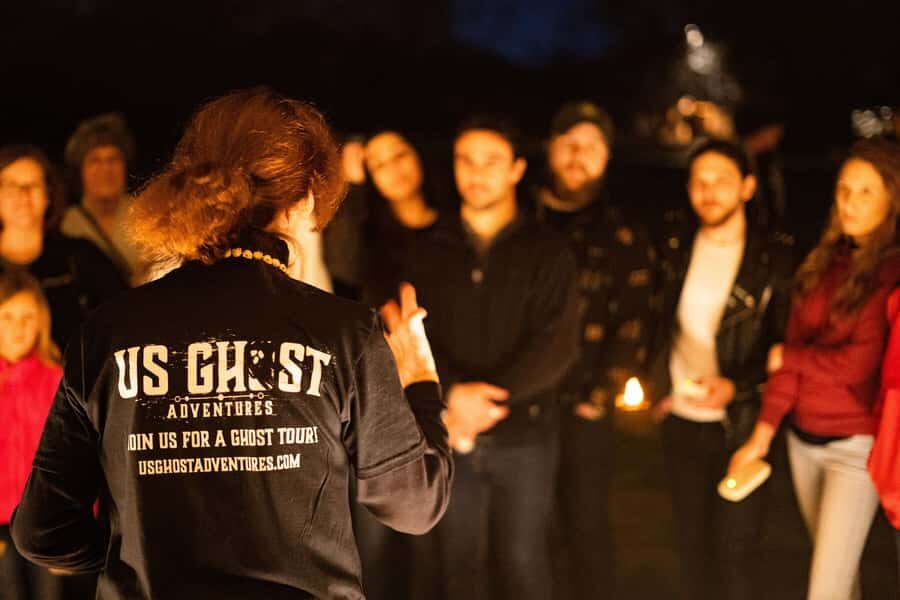
Union Street is where the tour starts layering meaning. Instead of treating it as just another downtown corridor, you’ll get a narrative frame for why the neighborhood looks the way it does now—and why some of the past refuses to stay buried.
This is where the haunted-history style comes through. The guide doesn’t just say, something bad happened. They connect the event to place: a corner, a building edge, a street context. I like that approach because it turns the city into a map you can read. Even if you don’t buy every ghost claim, the story structure helps you understand why people in Seattle built reputations, rumors, and legends around specific addresses.
One of the most praised strengths is that guides tend to point out hidden spots and small street details you might never notice. That matters on Union Street because so much of it is designed to look polished and forward-facing. The tour gives you permission to look backward instead.
Post Alley and the Gum Wall: The Spooky Side of a Normal Walk
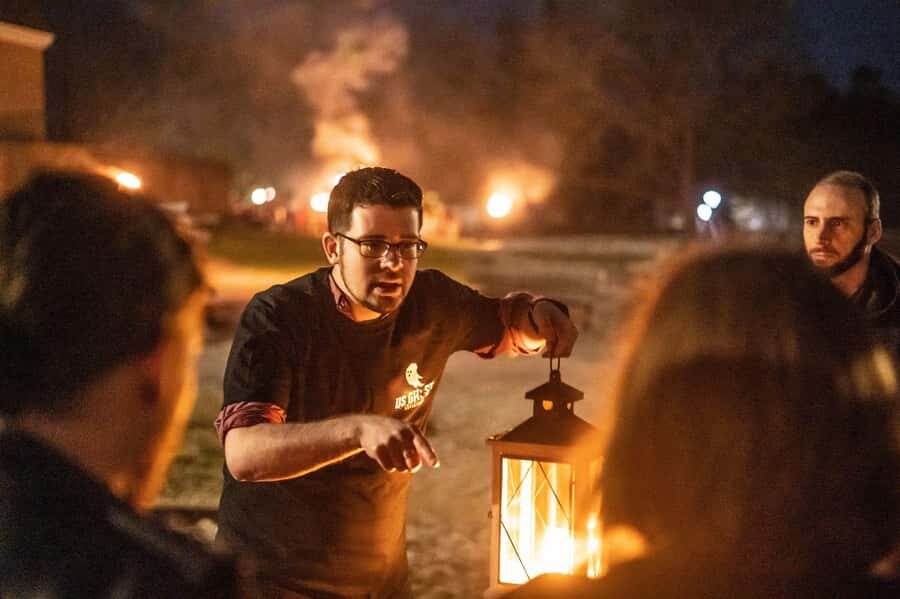
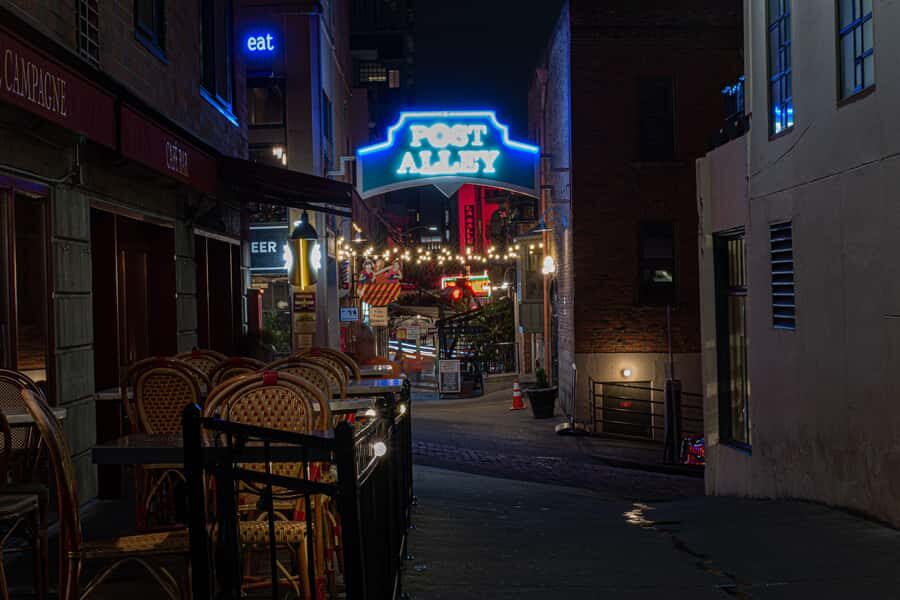
Post Alley is one of Seattle’s most recognizable narrow passages—and it’s also the perfect setting for ghost stories. You’ll be led through the alley in a way that makes it feel like a corridor in a different Seattle, one that’s quieter, darker, and less photographed.
Then comes the Gum Wall. Love it or hate it, it’s hard to deny the weirdness. The tour leans into that. It presents the legends attached to the area, including the idea of apparitions haunting the spot. Even if you’re skeptical, the Gum Wall works as a storytelling prop: it’s public, odd, and impossible to ignore—exactly the kind of place where people build myths.
I also like that the guide’s job isn’t to keep you tense the entire time. You get enough time to look around, orient yourself, and then hear how the guide interprets what you’re seeing. It keeps the experience fun instead of exhausting.
Practical note: Post Alley is tight. If you don’t like close quarters at night, position yourself with a little space around you when the group pauses for story time.
Butterworth Building: Unsettling Details You Can Point To
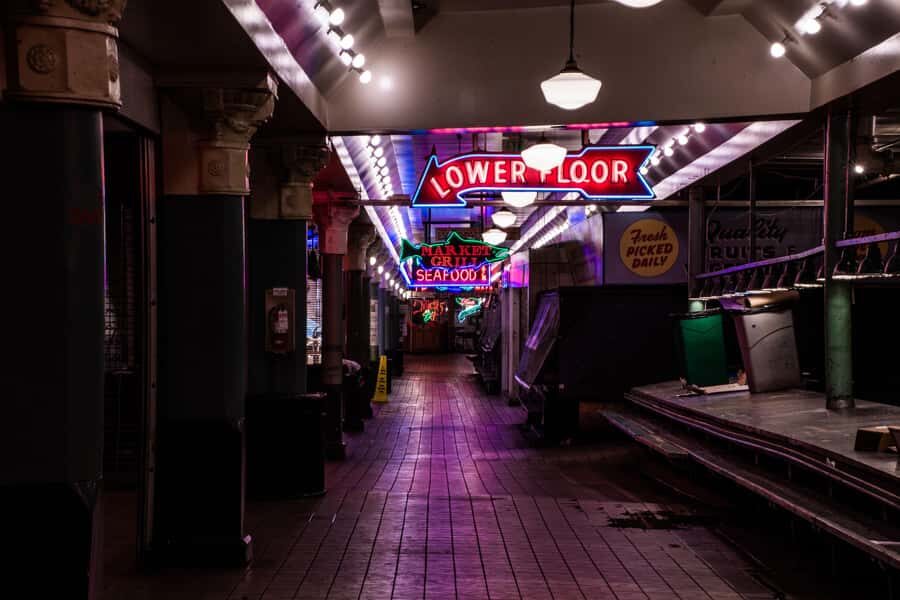
The Butterworth Building is the kind of stop that makes a ghost tour feel more like a city-history tour with teeth. You’ll hear chilling stories connected to the building and its past, with a focus on why certain locations in Seattle keep their spooky reputations.
This stop is especially valuable if you like your horror tied to real architecture and real municipal life. Buildings don’t just look old—they carry patterns of ownership, work, and neglect. The tour’s approach helps you see how a landmark’s identity can shift over decades while rumors keep resurfacing.
One caution: this is a tour that leans into dark themes, and it moves at night. If you’re prone to feeling uneasy in enclosed street areas (alleyways, narrow corners, and dim storefront edges), consider bringing a calmer mindset. The guide’s storytelling style is usually engaging, but it’s still a haunted walk.
Also, if you’re sensitive to sound, keep yourself where you can hear clearly. There have been comments that some guides need to project more at times, especially when street noise is up. Stand close enough that you can follow without straining.
Other walking tours we've reviewed in Seattle




Market Theater: Seattle Entertainment with a Shadow
The Market Theater stop brings the spooky story into the world of performance. The tour ties the building to unsettling history and explains how events—or rumors of events—help shape its haunted reputation.
This is a good place to pay attention to how the guide blends the practical and the eerie. Entertainment venues naturally attract stories because people gather there: auditions, crowds, arguments, disasters, and career changes. When you put those ingredients in a single building for years, you get a perfect environment for legends to take hold.
If you’re a fan of Seattle’s arts scene, this stop adds texture. If you’re not, it still works because the tour frames the theater as a social machine: people come together, the building absorbs it all, and later the stories come back as myths.
This is also a great checkpoint in the tour’s rhythm. By the time you reach the Market Theater, you’ve already heard enough context to appreciate why the guide is connecting the city’s entertainment energy to darker turns.
Suquamish Burial Grounds and the Corpse Elevator Stop
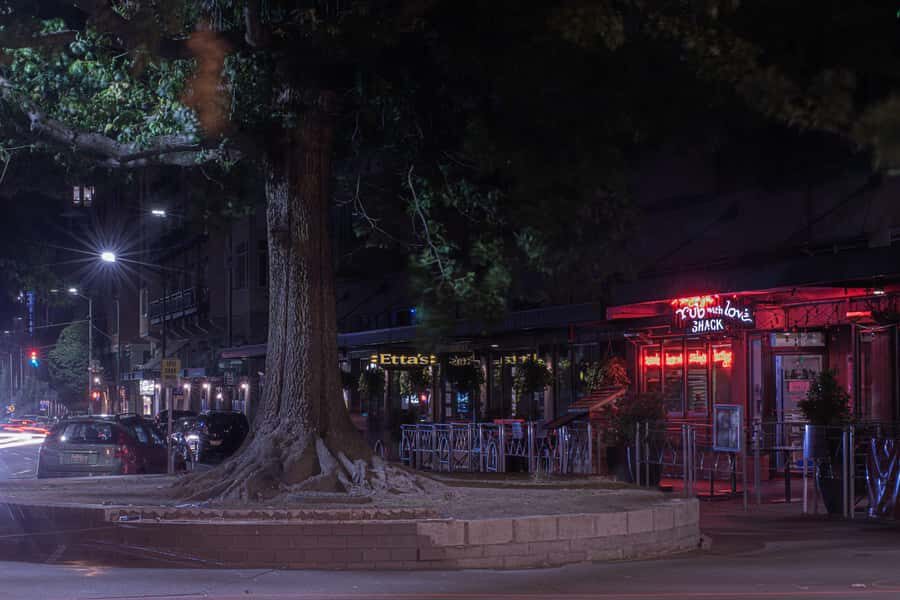
This is the heavy section of the walk. You’ll stand on ground tied to the Suquamish Burial Grounds, and the tour pairs that with the story of Seattle’s early history involving death and infrastructure—including mention of Seattle’s first corpse elevator.
Even if you’re a fan of spooky stories, this part deserves a quieter tone in your head. Burial sites and death-related sites can be intense, and it’s good to treat the stop with respect rather than playing it off for laughs. The guide’s delivery here matters, and the tour’s value is that it forces you to recognize how much of Seattle’s present sits on older layers of human experience.
Why this stop is so memorable: it pushes past “ghost lore” and into how cities handled burial, bodies, and public health. The tour doesn’t treat it like a fun gimmick—it positions these locations as foundational, which makes the supernatural framing feel more serious.
If you’re traveling with kids, the tour is described as family friendly and suitable for all ages, but I’d still keep an eye on your group’s comfort level during the more grim history moments.
What You Really Get: Storytelling That Teaches City Patterns
Here’s the best way to think about the value: this tour helps you learn how Seattle became Seattle. You’re not memorizing dates for an exam—you’re picking up patterns.
You’ll notice that the stories consistently connect three things:
- Location (a specific street, building, alley, or landmark)
- Human behavior (fear, secrecy, gossip, ambition, survival)
- Physical evidence (what you can see now that hints at what happened then)
Even if you don’t believe in ghosts, the tour gives you a framework for understanding why legends stick to certain blocks. Seattle has a history of immigration, work, reinvention, and the kind of growth that creates both heroes and villains. When you walk with a guide who can connect those forces to specific places, you get a stronger mental map than a quick drive-by ever could.
That’s why the tour can feel “worth it” even for skeptics. It’s not only about apparitions. It’s about the city’s habit of rewriting its own past.
Price at $27: When This Tour Feels Like a Bargain
At about $27 per person for roughly 1.5 hours, you’re paying for two things: a guide and a curated set of street stops you wouldn’t reliably choose on your own. In a city where paid walking tours are often $30–$50, $27 is pretty friendly—especially when the route hits multiple major downtown landmarks and delivers guided interpretation.
You also get the convenience pieces that reduce friction: you start at a clear downtown meeting point, the guide has an identifiable look (lantern included), and the tour includes an express security check so you’re not stuck waiting around.
The only price-related “watch-out” is time. If you want more story density, there’s mention of an extended version option. If you love ghost tours and you don’t mind longer time on your feet, that extended option may be the better match for your budget.
Guide Styles: Lantern Energy, Acting Voices, and Real Engagement
The guide is the engine here. The experience improves when the guide uses performance—changing voice, using facial expressions, and making the group part of the moment. Many of the strongest comments connect to guides who were interactive and animated, and who kept everyone moving together without losing the thread.
You’ll also see how guide personality affects the experience. One note to keep in mind: at least one guide-style concern has been raised about projection and clarity at times. So if you’re picky about hearing every word, choose a spot close to the guide and avoid getting pushed too far back in the group line.
Another small but meaningful detail: the guides seem to work hard to include more people in the story moment, not just talk at the loudest person. If you like tours where the guide reads the room, this setup tends to deliver.
And yes, a lantern on a downtown sidewalk helps. It’s theatrical without turning cheesy—more like a roaming storyteller than a stage act.
Who Should Take This Seattle Haunted Walk
This tour is a good fit if you:
- Want a night walking tour that doubles as a downtown history lesson
- Enjoy ghost stories, but also care about why a place has a reputation
- Like guided stops in classic Seattle pockets—Union Street, Post Alley, and the theater district area
It’s less ideal if you:
- Have trouble with hills or uneven ground, since the route includes inclines
- Need a very controlled environment for mobility (the tour information lists wheelchair accessibility, yet it also flags not being suitable for people with mobility impairments)
One more practical thought: it’s rain or shine. If you hate wet weather walking, plan your outer layer and use shoes that stay stable on damp pavement.
Should You Book the Seattle Terrors and Ghosts Tour?
If your ideal night in Seattle includes a guided walk, street-level stories, and a stop-by-stop mix of creepy lore with real downtown context, I think this is an easy yes. The $27 price feels reasonable for the number of notable locations you cover, and the guide-led approach is what keeps it from feeling like a checklist.
Book it especially if you want Seattle at night—when the streets look different and the stories actually fit the setting. If you’re sensitive to sound, or mobility is a concern, do your homework and plan your walking comfort first. Otherwise, this tour is a solid way to learn Seattle’s darker side without turning the evening into a boring lecture.
FAQ
Where does the Seattle Terrors and Ghosts tour start?
It starts outside the Four Seasons Hotel at 99 Union Street, Seattle, WA 98101.
How long is the tour?
The duration is listed as about 1.5 hours (check availability for starting times).
What does the guide wear, and how will I recognize them?
Your guide will be wearing a black US Ghost Adventures t-shirt and carrying a lantern.
Is the tour family friendly?
Yes. The tour is described as family friendly and suitable for all ages.
What should I bring?
You should bring comfortable shoes and weather-appropriate clothing. An ID card is also required (a copy is accepted).
What items are not allowed?
Smoking and intoxication are not allowed.
Is it wheelchair accessible?
The activity information lists it as wheelchair accessible, but it also states it is not suitable for people with mobility impairments. If mobility is a factor, confirm with the provider before booking.
What is the cancellation policy?
Free cancellation is offered up to 24 hours in advance for a full refund.