REVIEW · CRUISES & BOAT TOURS
Seattle Locks Cruise
Book on Viator →Operated by Argosy Cruises · Bookable on Viator
Seattle’s locks run the show. This one-way cruise ties together Lake Union, the Ballard Locks, and Puget Sound with live onboard commentary and great photo angles of the skyline from the water.
I especially like the live narration that turns landmarks into stories you can actually picture, with guides and crew who keep things clear and fun (I’ve heard from captains and guides like Harrison and Kyle). I also love the practical setup: indoor and outdoor seating, plus restrooms onboard, so you’re not stuck choosing between comfort and views.
One thing to plan for: it’s a one-way route with two possible departure points and different end locations, so you’ll want to confirm where you start and where you drop off before you arrive.
In This Review
- Key Points I’d Highlight Before You Go
- A One-Way Seattle Waterline Tour: Lake Union to Puget Sound
- Picking Your Start: Pier 54 vs AGC Marina (and Why Drop-Off Planning Matters)
- Onboard Comfort: Seating, Restrooms, and the Cold-Water Reality
- Lake Union’s City-Glass Water: Shipyards and Floating Home Communities
- Gas Works Park and Fremont Bridge: Seattle Icons, Close Enough to Feel It
- The Ballard Locks Moment: Dropping 20 Feet Into a Different Kind of Water
- Lake Washington Ship Canal and Fisherman’s Terminal: Working Water, Real Jobs
- West Point Lighthouse, Puget Sound Views, and the Chance of Wildlife
- Space Needle From Water: Panoramic Plus Close-Up Photo Angles
- Time, Value, and What You Really Get for $63.28
- Who This Seattle Locks Cruise Is Best For
- Should You Book This Seattle Locks Cruise?
- FAQ
- How long is the Seattle Locks Cruise?
- Is the cruise one-way or round-trip?
- Where can I depart from?
- What’s included in the ticket price?
- Are snacks and drinks included?
- When should I check in before the cruise?
- Can kids ride for free?
- Are service animals allowed?
- Is return transportation included?
Key Points I’d Highlight Before You Go
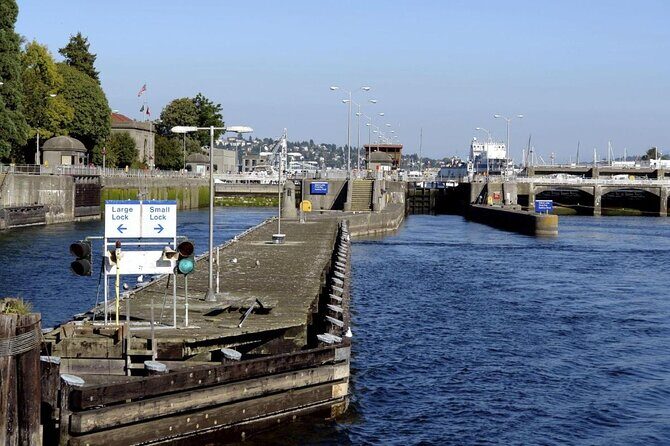
- Watch the locks work up close, including the lift/lower action between freshwater Lake Union and saltwater Puget Sound
- Photo-forward route, with major skyline angles and unobstructed chances to shoot the Space Needle
- Multiple Seattle icons in one outing, including Gas Works Park, Fremont Bridge, Fisherman’s Terminal, and West Point Lighthouse
- Live narration with real local detail, handled by the captain and onboard guide so questions stay easy to manage
- Comfort matters on this cruise: indoor/outdoor seating, restrooms onboard, and a smaller-boat feel thanks to a max group size
- Plan for the temperature shift once you’re out into saltwater waters
A One-Way Seattle Waterline Tour: Lake Union to Puget Sound
This is the kind of cruise that makes Seattle feel different fast. Instead of standing on a sidewalk waiting for views, you glide through the city’s working and scenic water zones, where the neighborhoods are built right onto the shoreline.
The route is also efficient. In about two hours, you get from Lake Union’s city-in-the-middle atmosphere to the business-and-bays vibe of Puget Sound, with the Ballard Locks as the star mechanic. You’ll also pass through spots tied to Seattle movie history—more on that as you go.
You should expect a guided experience more than a sightseeing-only ride. Live narration keeps the landmarks connected, so the skyline doesn’t feel like random scenery. It feels like a place with a function.
Other Seattle tours we've reviewed in Seattle
Picking Your Start: Pier 54 vs AGC Marina (and Why Drop-Off Planning Matters)
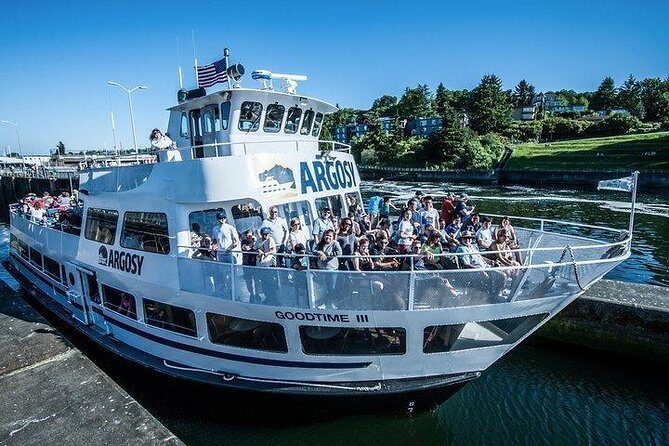
This cruise is one-way. Depending on your ticket, you’ll depart from one central marina and end at a different central marina. You’ll see two different options: Pier 54 on the waterfront or AGC Marina on Lake Union.
Why I think this matters: Seattle marinas are close in map terms, but far in time if you don’t line up your return. Even reviews call out confusion around where to board and where parking is if you start at the Lake Union end.
My practical advice: before you go, screenshot your ticket details showing your departure point. Then decide how you’ll handle getting from the end location back to your base. You may be able to purchase a return bus ticket seasonally, but it’s not included in the standard fare. A rideshare can also work well if you want zero waiting.
Onboard Comfort: Seating, Restrooms, and the Cold-Water Reality
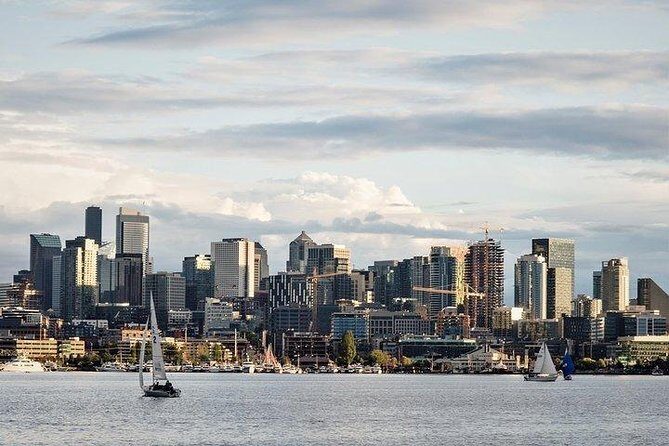
You get both indoor and outdoor seating, plus restrooms onboard. That sounds basic, but it’s exactly what makes a 2-hour cruise comfortable even when Seattle weather does its thing.
Bring layers. Multiple people mention it gets colder once you move into the saltwater section, especially around the lock area. Even on a clear day, the water air can feel sharper. A light jacket or rain layer can keep you sitting outside for longer instead of retreating inside.
The boat setup is also described as clean and roomy, and safety checks feel taken seriously. If you’re traveling with kids or bringing older family members, the mix of seating and the live commentary make it easier to keep everyone engaged without forcing a full-time standing-view.
Lake Union’s City-Glass Water: Shipyards and Floating Home Communities
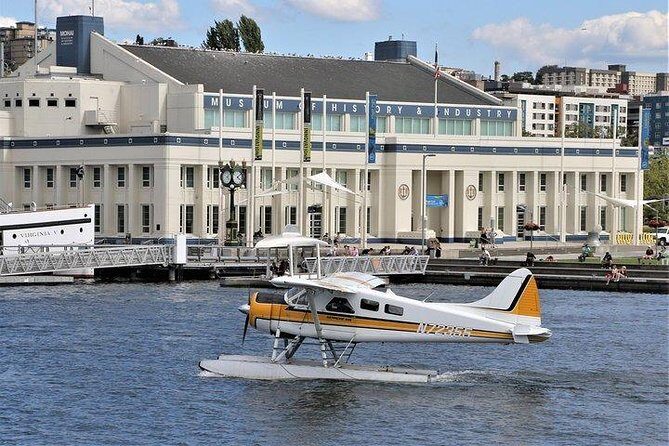
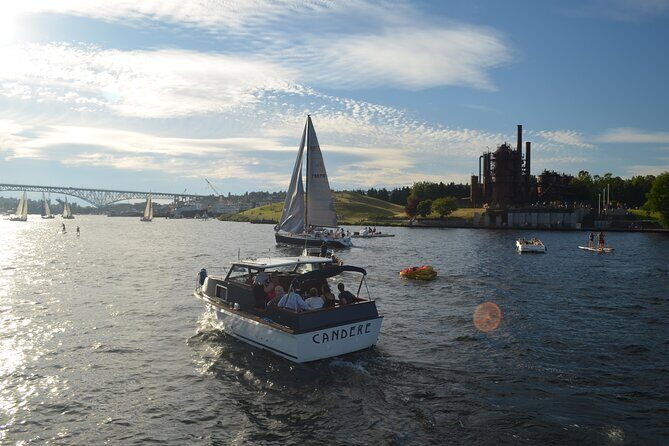
Lake Union is the intro act: right in the middle of the city, framed by buildings and highways. It’s where you’ll get that instant Seattle vibe—recreation in the foreground, industry behind it, and neighborhoods looming over the water.
You’ll pass a shipyard area where full-service vessel repairs and renovations happen, with large commercial fishing vessels entering dry-dock zones. It’s not just scenery; it’s the working side of Seattle’s boating world. For people who like real-life operations (not just postcard views), this section delivers.
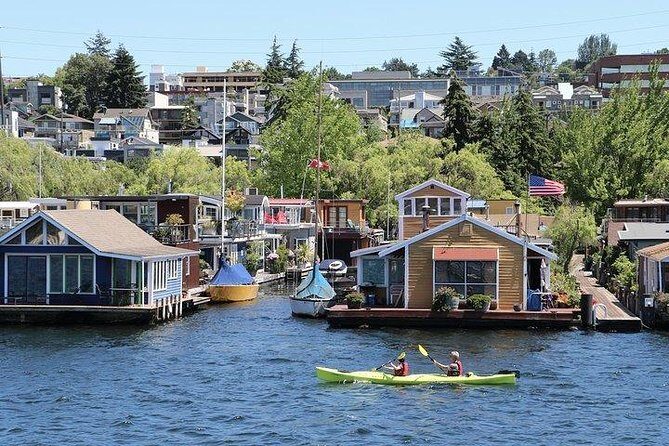
Then come the floating homes and houseboats. This is where the cruise gains personality. You’ll see a range from quirky and colorful exteriors to more modern, polished setups, including the floating home featured in the classic 90s movie Sleepless in Seattle. It’s a fun moment because you can watch the movie-history connection unfold as you go by.
If you’re hoping for great photos, this part of the route is a good time to get your camera ready early. The boat is moving, but the contrast between floating homes and the city backdrop gives you strong frames.
Gas Works Park and Fremont Bridge: Seattle Icons, Close Enough to Feel It
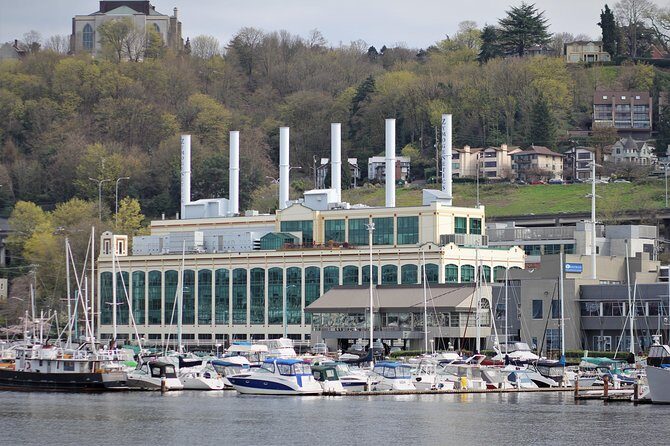
After Lake Union’s houseboat life, you’ll cruise past Gas Works Park, a former coal gasification plant that’s now a public hangout space. People tend to remember this spot because it looks industrial and artsy at the same time, like the past got repurposed into a community playground.
You’ll also get a movie tie-in: it was a filming location for 10 Things I Hate About You. You’ll likely recognize it as the cruise rolls by, which is a nice way to connect the city’s look to pop culture without making it feel like a theme park.
Next up: Fremont Bridge. This is one of the few bridges the cruise goes under on the route, and it’s also one of the busiest drawbridges in the United States. The practical thrill is that the boat fits close beneath the mechanism, so you get the sense of scale without needing to search for vantage points.
If you’re the type who likes engineering details and “how does that work” moments, pay attention here. The live narration typically explains what you’re seeing as the ship approaches.
Other boat tours in Seattle

The Ballard Locks Moment: Dropping 20 Feet Into a Different Kind of Water
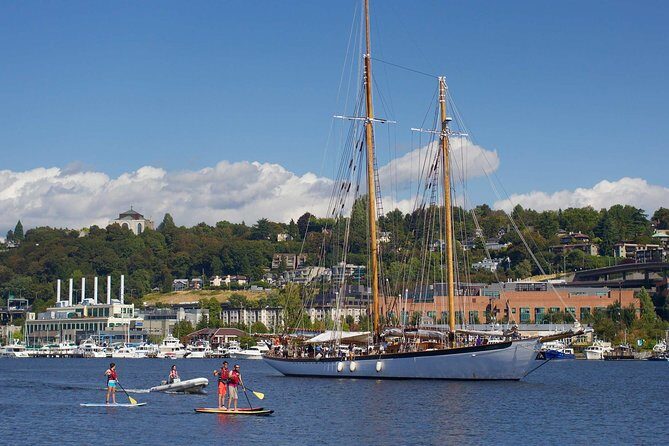
Now you hit the main event: the Ballard Locks. This is where Seattle stops being just pretty and starts being functional. You’ll experience your vessel being lowered an average of 20 feet (about 6 meters) from freshwater Lake Union to saltwater conditions of Puget Sound.
The locks system is over 100 years old and operated by the U.S. Army Corps of Engineers. That gives the experience weight. You’re watching a real infrastructure system that supports water traffic, fishing schedules, and long-term regional water management.
What I find valuable: the narration makes the mechanics understandable. You’re not just staring at a structure; you’re watching a controlled water-level shift and learning why it matters.
For anyone who plans to take photos, this is the stretch where it helps to be ready right when the lock action begins. A lot of the best angles come during the slow, controlled movement rather than before or after.
Lake Washington Ship Canal and Fisherman’s Terminal: Working Water, Real Jobs
After the locks, the cruise continues through the Lake Washington Ship Canal, following an actual footpath along the way. The walking trail is about 1.9 miles long and traces an abandoned railroad line, with views toward Ballard’s maritime industrial area. Even though you’re not walking it yourself, it’s a great way to learn how the city’s land history ties to the water side.
Then you’ll reach Fisherman’s Terminal. This is a Port of Seattle area with commercial fishing vessels and maritime history, and it’s known for housing boats from Deadliest Catch. The point isn’t the TV connection alone; it’s that the terminal shows how much of Seattle’s identity is built on work at sea.
This section also tends to feel energetic. Even from the boat, you can sense the activity and industry around you. If you like cities that still have a working backbone, you’ll appreciate it more here than during purely scenic stops.
West Point Lighthouse, Puget Sound Views, and the Chance of Wildlife
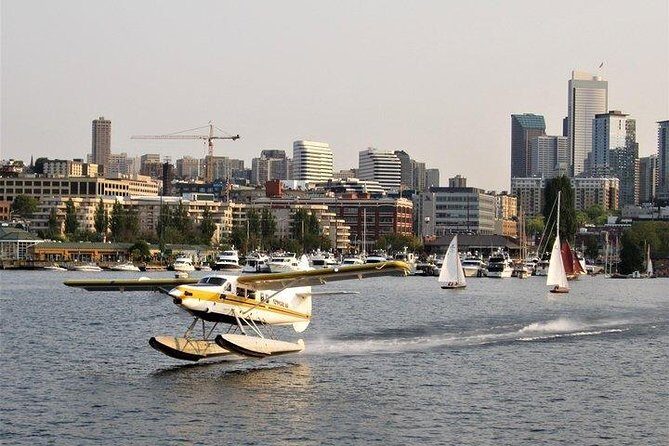
Next, the cruise heads toward West Point Lighthouse on its beaches, plus the nearby Magnolia neighborhood viewpoint. The area is described as Seattle’s largest natural park at about 560 acres, with views toward Puget Sound.
A good chunk of the joy here is breathing room. From the boat, you can take in the scale of the water and coastline without feeling like you’re trapped in traffic or crowds.
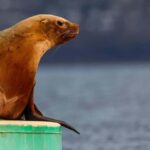
From there, you’ll cruise through views of the inland estuary system—about 95 miles long—with the Olympics in the distance on clear days. The tour notes that you might even spot wildlife if you’re lucky. When you’re on the water, small surprises feel more likely than from shore.
One practical tip: keep an eye out for marine life whenever the boat slows or passes quieter stretches. If you’ve got binoculars, this is the kind of cruise where they can pay off, though the narration helps even without them.
Space Needle From Water: Panoramic Plus Close-Up Photo Angles
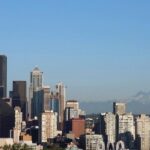
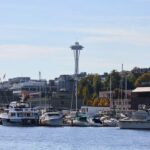
Then you get one of the most satisfying parts of Seattle sightseeing: the cruise makes sure to pass the Space Needle. You’ll get both close-up and panoramic perspectives while you’re still on the move.
This is where water-level framing matters. Photos you take from sidewalks flatten the view. From the water, you get the Needle in context—skyline composition, waterfront angles, and layers of city behind it.
If you’re aiming for crisp shots, consider getting toward the front or top seating early when you board. A tip that keeps coming up is that sitting in those spots makes it easier to see and photograph everything as it unfolds.
Time, Value, and What You Really Get for $63.28
The fare is listed at $63.28 per person for about 2 hours. That’s not a bargain price, but it’s also not priced like a long-day private charter. For me, the value comes from combining three big ingredients:
- You’re getting the Ballard Locks action, which is harder to see well from shore.
- You’re also getting a guided route through multiple major Seattle waterfront icons in one sitting.
- You get comfort features that actually matter for 2 hours: indoor/outdoor seating, restrooms, and live narration.
The cost makes more sense if your goal is “Seattle in a single water timeline,” not just a generic scenic cruise. If you already know you’ll love skyline photography and working-city details, this is the sort of experience that feels efficient rather than rushed.
Capacity is maxed at 175 people. That’s not tiny, but it helps explain why many people describe the boat as not overly crowded, with space to move and choose seating.
Who This Seattle Locks Cruise Is Best For
This fits a wide range of people because it mixes history, operations, and city views without turning technical. Families tend to like it because the scenery stays interesting and the narration keeps it understandable for all ages.
Couples often like the calmer pacing. Several comments describe the water time as a break from city crowds, which is exactly what many people want after a day of walking downtown.
If you’re a fan of Seattle neighborhoods and infrastructure—shipyards, terminals, drawbridges, and the mechanics of how water systems work—you’ll feel rewarded at each turn. If you mostly want quiet wilderness views, you may find it more city-industrial than remote, but that’s also what makes the route unique.
Should You Book This Seattle Locks Cruise?
Book it if you want a guided water route that hits the Ballard Locks, the Space Needle, and working waterfront sights in one smooth block of time. It’s especially worth it if your schedule is tight and you don’t want to piece together separate tours for locks + skyline.
Skip it if you’re strongly heat/sun sensitive and can’t handle cool water air, unless you pack layers. Also, if you hate planning drop-offs, double-check your start and end points before you commit.
My final take: for most people, this cruise is the kind of Seattle highlight that makes the city feel both photogenic and functional. You’ll come away understanding what you saw, not just that it looked nice.
FAQ
How long is the Seattle Locks Cruise?
The cruise runs about 2 hours.
Is the cruise one-way or round-trip?
It’s one-way. You start at one central marina and end at another, depending on the direction shown on your ticket.
Where can I depart from?
You may depart from Pier 54 on the waterfront or from AGC Marina on Lake Union. Check your ticket subtitle to confirm your departure point.
What’s included in the ticket price?
Included are the 2-hour sightseeing cruise, live narration, interior and exterior seating areas, and restrooms available on board.
Are snacks and drinks included?
No. Snacks and beverages are available for purchase on board.
When should I check in before the cruise?
Check in 30 minutes prior to tour time. Boarding starts 20 minutes prior, and gates close 5 minutes before departure.
Can kids ride for free?
Kids age 3 and under ride free, but they still need a boarding pass.
Are service animals allowed?
Yes, service animals are allowed.
Is return transportation included?
Transportation between the start and end locations isn’t included, though a return bus ticket is available for purchase seasonally.