REVIEW · MT RAINIER DAY TOURS
Best of Mount Rainier National Park from Seattle: All-Inclusive Small-Group Tour
Book on Viator →Operated by Evergreen Escapes Seattle · Bookable on Viator
One day on Rainier. That is the plan.
This tour is interesting because it turns a tough “no-car” situation into a full highlights circuit with a small group and a real naturalist guiding you through what you’re actually seeing—old-growth forest, glaciers-from-a-distance views, and major waterfalls. I love the all-in-one pacing: coffee and snacks in the morning, a proper picnic lunch midday, and national park entry fees wrapped in so you are not juggling ticket math all day. One drawback to plan for: the day is weather-dependent, and the hike/snowshoe portions can be slippery or a bit bouncy, especially if you show up in the wrong footwear.
You start with an early Seattle pickup, drive in a comfortable vehicle, and then spend the day around Longmire and Paradise—the two Rainier areas that make first-timers feel like they cracked the code. Depending on the season, you might stroll Nisqually Vista Trail, hop between viewpoints like Christine Falls and Narada Falls, then end up on an easy-to-moderate hike or a short winter snowshoe outing. It is a long day, but it is built for people who want maximum “wow” with minimum logistics.
In This Review
- Key highlights you’ll feel immediately
- Leaving Seattle without the driving headache
- 8:00 am start, with coffee already handled
- Longmire area: old-growth forest and waterfalls in one circuit
- Quick viewpoint wins: Christine Falls and Narada Falls
- Paradise Valley: berries in summer, snowshoe time in winter
- Henry M. Jackson Visitor Center and Myrtle Falls meadows
- Reflection Lakes: the mirror view moment
- Longmire Museum, Trail of the Shadows, and Twin Firs
- How strenuous is it, really, from Seattle?
- Food, snacks, and the picnic lunch you’ll actually remember
- Price and value: why $344 feels fair on Rainier days
- Guides make or break it: what you can expect from the leadership
- Who this tour suits best (and who should think twice)
- Should you book Best of Mount Rainier National Park from Seattle?
- FAQ
- How do I arrange pickup for the Mount Rainier day tour?
- What time does the tour start, and where do we meet?
- Is this tour walkable for most people?
- What should I wear and bring?
- Do they provide snowshoes and poles in winter?
- Will I get coffee, snacks, and lunch?
- Is there a vegetarian option?
- How strenuous is Paradise Valley in different seasons?
- What happens if the weather is bad?
- What is the minimum age for the tour?
Key highlights you’ll feel immediately
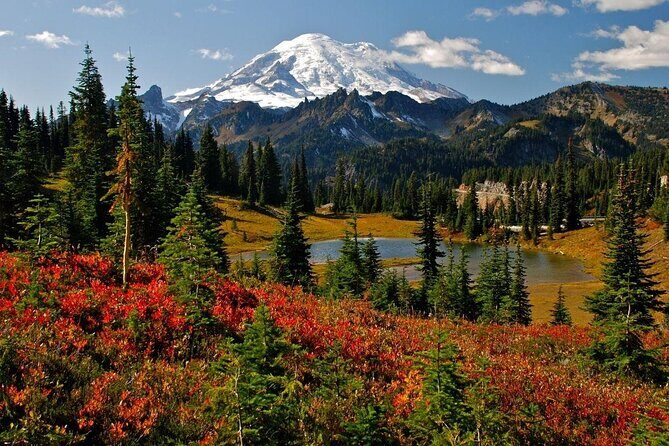
- Small group (up to 10) means you get a more personal guide-style experience instead of sprinting off a bus.
- Naturalist guidance helps you read the forest fast—lichens, moss, old-growth trees, volcano basics, and river origins.
- All-inclusive comfort: coffee/tea, snacks, and a picnic lunch with national park entry fees included.
- Waterfalls plus viewpoints: quick stops like Christine Falls and Myrtle Falls keep the day moving without exhausting you.
- Paradise in two modes: summer berries and meadows, or winter snowshoeing and quiet snowfall.
- Rainier views are not a lottery: you hit multiple spots where you might see the peak and surrounding scenery.
Leaving Seattle without the driving headache
If you are staying in Seattle and you do not want to rent a car (or you do not want the “I hope I can park” stress), this is one of the cleanest solutions. The tour is built around round-trip hotel pickup in downtown Seattle, using a comfortable luxury vehicle and a tight schedule that gets you into the park areas most visitors struggle to reach efficiently.
Another thing I like: because the group is limited to 10 people, the guide can slow down when the terrain is uneven and still keep momentum. It is not a cram-and-chase format.
Other Seattle tours we've reviewed in Seattle

8:00 am start, with coffee already handled
Your day kicks off at 8:00 am, and the standard meeting point is the Sheraton Grand Seattle (1400 6th Ave). If your hotel is outside the usual legal pickup zone, you meet at the default Sheraton location, and they’ll confirm your exact pickup time and place the afternoon before.
Before you even start walking in the park, you get coffee and pastries. It sounds small, but it matters on a Rainier day. You are heading into elevation, changing weather, and wet ground, and a warm first step helps you settle in instead of rushing.
Longmire area: old-growth forest and waterfalls in one circuit
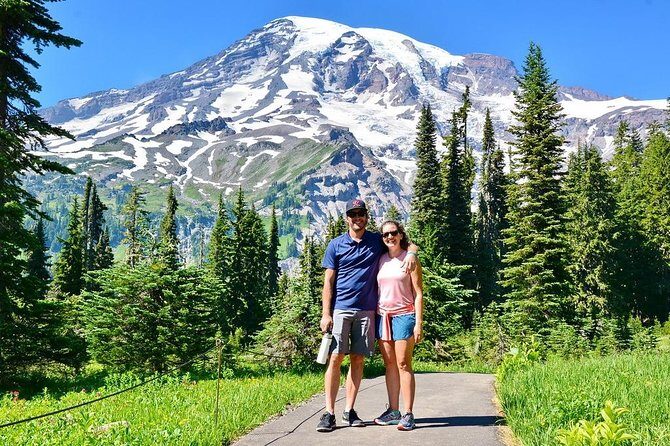
The day revolves around Rainier’s major visitor zones, starting with time in the park near Longmire. One of your early priorities is the walk along the Nisqually Vista Trail, which helps you ease into the experience rather than starting with the steepest section.
This part is special because you are not just staring at big scenery—you’re walking through old-growth forest, where it becomes obvious why Rainier’s ecosystems are so layered. You’ll also be in the right area for waterfalls and the kind of mountain views you can’t reliably get if you only rush to one overlook.
Practical note: the forest floor can stay damp, so even “easy” trails feel different with wet moss underfoot.
Quick viewpoint wins: Christine Falls and Narada Falls
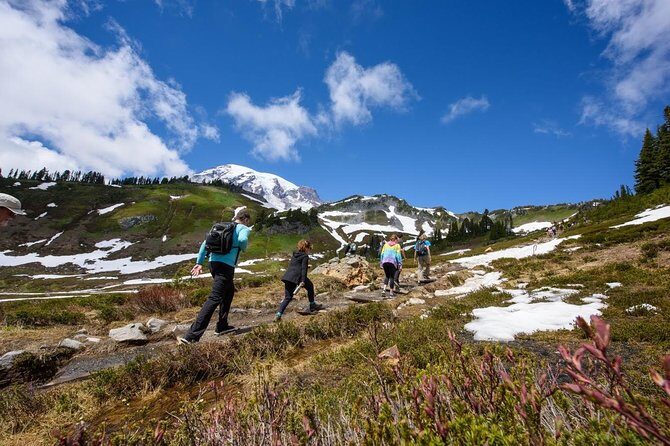
After Longmire, you get a couple of short, satisfying stops that work well for mixed energy levels in a group.
- Christine Falls Viewpoint (about 10 minutes): a short walk to a classic postcard angle. It is quick, but the payoff is real when the day gives you decent visibility.
- Narada Falls (about 30 minutes): this is a more rewarding waterfall leg where you can access multiple falls along the route up the mountain. It is one of those segments where your camera gets heavier because you keep finding angles.
The potential downside? If it is pouring or the ground is slick, the photos might be “rainy moody” instead of crisp. You still get the waterfalls; just expect the mountain to play hide-and-seek.
Paradise Valley: berries in summer, snowshoe time in winter
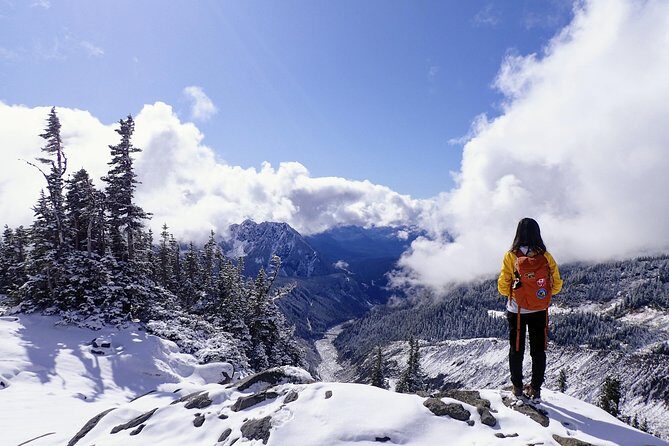
This is the heart of the trip. The guide aims for Paradise Valley, and what you experience depends on the season.
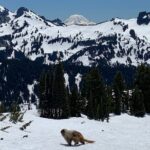
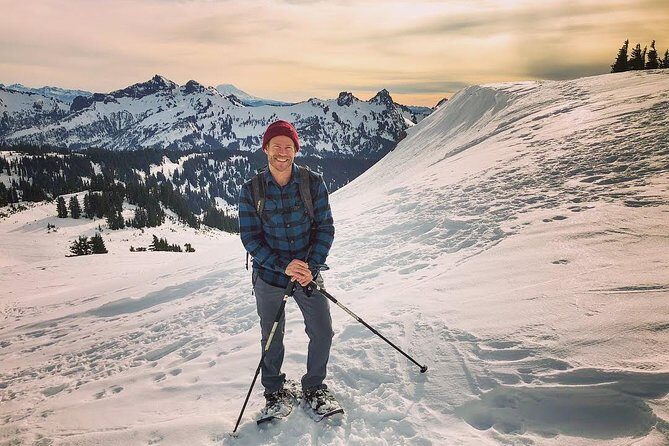
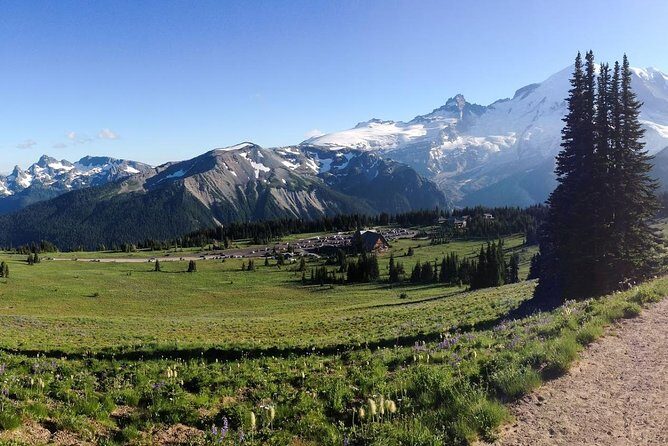
In summer, you might take a sub-alpine hike where picking berries is part of the day’s vibe. In winter, Paradise can mean legendary snowfall and a more quiet feel, with an introductory snowshoe trail instead of (or in addition to) standard hiking.
Either way, it is valuable because Paradise is where Rainier’s volcanic influence and glacial power become easy to understand. You are seeing ecosystems shaped by snowpack and meltwater, and your guide’s explanations help you connect the dots—why the rivers look the way they do, and why the forests change as you climb.
Also, you’ll have frequent stops for pictures and light snacks along the drive and walk portions, which keeps it from feeling like you’re constantly “catching up” to the group.
Other Mt Rainier day tours we've reviewed in Seattle

Henry M. Jackson Visitor Center and Myrtle Falls meadows
Once you reach Paradise, you get a chance to slow down at the Henry M. Jackson Visitor Center. This is where interpretive information helps you anchor what you saw earlier—trees, ecology, and what makes the park tick. It also works as a mental reset before the meadow and waterfall segments.
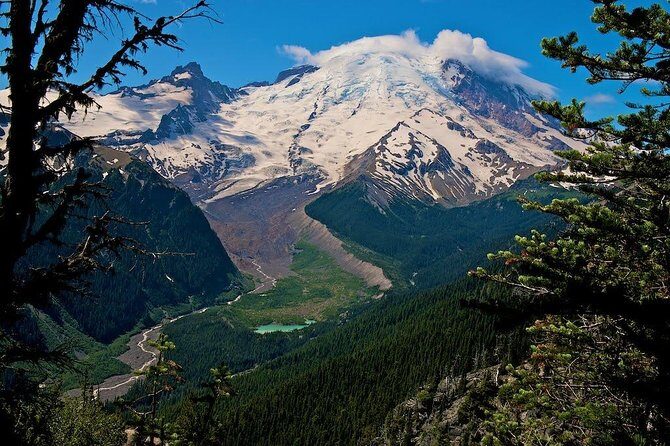
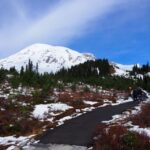
Then comes Myrtle Falls (about 30 minutes). This walk stays relatively approachable and ends with almost constant views of Mt. Rainier’s peak when weather allows. Even if the mountain is hidden behind clouds, the area is still rewarding because the waterfall and meadow setting stay visually rich.
If you want a tip: keep your layers ready here. Paradise weather can shift fast.
Reflection Lakes: the mirror view moment
You may also stop at Reflection Lakes near Paradise. This stop is short (about 15 minutes), but it is designed for a specific reason: the lake can reflect Mt. Rainier like a mirror when conditions cooperate.
This is also a realistic “Rainier lesson”: sometimes the peak is crisp and visible, and sometimes it fades into mist. The route gives you multiple chances to see the mountain through different vantage points.
If you get clear weather here, you will know why people talk about it so much.
Longmire Museum, Trail of the Shadows, and Twin Firs
Later in the day, you return toward the Longmire area for a deeper forest and museum-style experience.
- Longmire Museum (about 20 minutes): historic park area feel, plus a good chance for souvenirs, cocoa, and a bathroom break. It’s also an easy way to warm up if you started the day in wet or cool conditions.
- Trail of the Shadows (about 30 minutes): a short loop where giant old-growth spruce trees cluster around bubbling mineral springs. Even on a day with mixed visibility, this walk tends to feel magical because it’s tactile—steam, moss, mineral water, and texture everywhere.
- Twin Firs Loop Trail (about 30 minutes): another approachable loop in the Longmire area, focused on massive trees towering over you.
If your idea of a great day includes “big trees and quiet moments,” this portion is a great fit. It balances the more scene-stealing waterfalls earlier in the day.
How strenuous is it, really, from Seattle?
The tour is rated easy to moderate, and the guide can tailor pacing to the group. That matters because you are mixing viewpoints with a few walks that can add up—especially if snow and ice show up.
What I would plan for:
- Comfortable shoes for walking
- Waterproof boots required October–June
- Layers for cold/wet weather
They also offer additional warm clothing upon request, and during winter months you’ll have snowshoes and poles included. In practice, that means you should be able to participate even if you are not a “serious hiker,” as long as you listen to the guide’s pacing cues.
One winter reality check: severe weather is rare, but road closures can happen. On those days, the guide adjusts the itinerary to match what’s accessible.
Food, snacks, and the picnic lunch you’ll actually remember
This tour wins a lot of goodwill from how it handles the food side—no “grab a granola bar and suffer” strategy.
You get:
- Coffee and/or tea in the morning
- Lots of snacks and sparkling water
- A picnic lunch midday
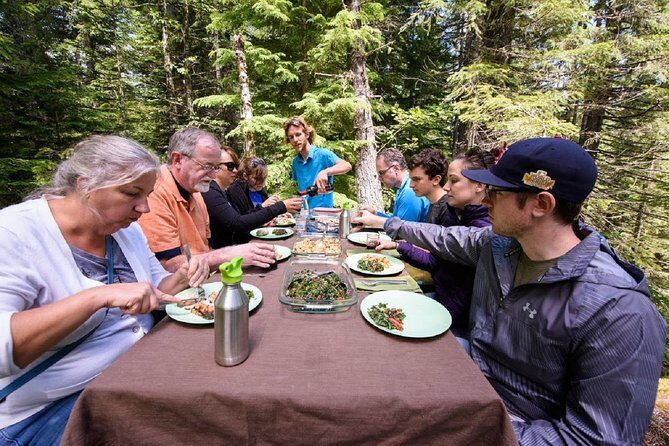
The lunch is a seasonal picnic from a local female-owned caterer, usually including options like grilled chicken or salmon, plus a sandwich or wrap, grain or green salad, and water or soda. You can also find hints in the guide’s style that they take the meal seriously. Some past days on this tour have included more than basic sandwich fare—think hot items like soup paired with protein and salad—so you are not just “filled,” you’re genuinely cared for.
Dietary restrictions: you need to inform them at least 48 hours before. If you have allergies, this is the moment to be specific—tell them what you need and stick to that timeline.
Price and value: why $344 feels fair on Rainier days
$344 for a full day can look steep until you tally what you’re getting and what it would cost you if you did it alone.
Here’s what you’re effectively buying:
- Transportation (round-trip from Seattle in a small-group vehicle)
- National park entrance fees
- Food (coffee/tea, snacks, and a catered picnic lunch)
- Guiding from a naturalist, which is the difference between seeing a waterfall and understanding why the park is the way it is
- During winter: snowshoe and pole use
The value logic is simple: you’re paying to remove the biggest barriers—driving, planning stops, and figuring out timing—so you can focus on the scenery. And because the group is capped at 10, you’re more likely to get a smooth day instead of a crowded scramble.
Also, the tour is commonly booked about 49 days in advance, so if you’re aiming for a specific season, don’t wait until the last minute.
Guides make or break it: what you can expect from the leadership
This is one of those tours where the guide’s approach changes the entire day. The naturalist element isn’t just trivia; it makes the walking feel purposeful.
I especially like that the day highlights different parts of the park through explanation, including geology and volcano basics, and the way the guide points out things you would miss on your own—like tree and forest details and how rivers link back to glacial melt.
You might get different guides on different days. Past guides tied to this experience include people like Dan, Marty, Brent, and Erin, and multiple guests specifically praised how well the leaders handled pacing, weather surprises, and group comfort.
Who this tour suits best (and who should think twice)
This day trip is a great fit if you:
- Want the main Rainier hits without a car
- Like guided nature walks and short hikes
- Prefer a small group that can move at a human pace
- Need lunch and snacks taken care of
It may be less ideal if you:
- Want only a short, minimal-walking outing (this includes several trail segments)
- Expect guaranteed glacier-level views from the summit every minute (Rainier weather is real)
- Want a long, deep backcountry hike rather than a highlights circuit
Should you book Best of Mount Rainier National Park from Seattle?
If you’re coming to Seattle and you only have one day to “go beyond the city,” I’d book this. It’s built to solve the hardest problem—getting to Rainier efficiently—while still giving you time at multiple meaningful stops: Longmire forest, Christine Falls, Narada Falls, Paradise Valley (hike or snowshoe), Myrtle Falls meadows, and the tree-and-mineral-spring loops at the end.
You just need to show up ready for a wet-wonder day: waterproof footwear in the colder months, layers, and a flexible attitude toward changing skies. Do that, and you’ll come away with the feeling that you didn’t just visit Rainier—you actually learned how it works.
FAQ
How do I arrange pickup for the Mount Rainier day tour?
Pickup is offered from downtown Seattle hotels (and other downtown lodging). If you are outside the legal pickup zone, you can meet at the default location at the Sheraton Grand Seattle. They confirm your exact pickup time and place the afternoon before.
What time does the tour start, and where do we meet?
The start time is 8:00 am, and the standard meeting point is the Sheraton Grand Seattle at 1400 6th Ave.
Is this tour walkable for most people?
Most travelers can participate, and the tour is rated easy to moderate. The guide can tailor pacing to the group, and the group size is capped at 10.
What should I wear and bring?
Wear comfortable closed-toe walking shoes. Waterproof boots are required from October to June. Bring layers, a light wind/waterproof jacket, and consider a hat and sunglasses. The tour also includes warm clothing available upon request.
Do they provide snowshoes and poles in winter?
Yes. During winter months, snowshoes and poles are included.
Will I get coffee, snacks, and lunch?
Yes. You’ll have coffee and/or tea, plus lots of snacks and beverages. A picnic lunch is provided midday.
Is there a vegetarian option?
Yes. You can request special dietary needs at checkout, and they will do their best to accommodate vegetarian needs if you add the request.
How strenuous is Paradise Valley in different seasons?
In summer, you’ll have a sub-alpine hiking experience in Paradise. In winter, you’ll take an introductory snowshoe trail. Both are designed for easy-to-moderate participation, but conditions can change what feels easy.
What happens if the weather is bad?
They operate in all weather conditions and adjust the itinerary as needed. If severe winter weather leads to road closures, the guide adapts to what is accessible. If the tour is canceled due to poor weather, you’ll be offered a different date or a full refund.
What is the minimum age for the tour?
All participants must be 10 years or older.