REVIEW · MT RAINIER DAY TOURS
Mt. Rainier highlights – old forest, falls and glaciers
Book on Viator →Bookable on Viator
Rainier in one day is a real gift. This tour focuses on the park’s core highlights—giant glaciers at Paradise and waterfalls + old-growth forest—without making the day feel like a sprint. I especially like the glacier-side picnic moment and the relaxed small-group pace that leaves time for photos and short breaks. One catch: the hike segments are short, but the trail can be steep and the whole day is a long one from Seattle.
What makes it work for real life is the seasonal swap. In winter and spring (Nov–Jun), you snowshoe instead of hiking, with no experience required, plus gear like snowshoes and crampons is included. The guides (I saw names like Susan, Rachel, John, Nate, and Matt) tend to be patient and hands-on on the trail, with options depending on how much effort you want.
In This Review
- Mt. Rainier Highlights: The Stops That Actually Matter
- Paradise Starts The Day (and Sets the Tone)
- Tip I’d follow
- Glacier Views and the Glacier Picnic Value
- Narada Falls: A Short Walk With a Proper Wow
- Reflection Lakes: Mirror Views in Summer, Frozen Reality in Winter
- Christine Falls Under an Old Stone Bridge
- Longmire: Old-Growth Forest Without the Crowds-Only Feel
- What You’ll Actually Do on the Trail: Steep Spots and Snow Gear
- If you’re planning gear
- Seattle Pickup, Small-Group Pace, and the Long Drive Factor
- Small-group meaning
- Price Check: Is $179 Worth It for a Rainier Day?
- Guides, Pace, and How Options Can Help You
- Should You Book This Mt. Rainier Highlights Tour?
- FAQ
- How long is the tour?
- What will I be doing at Paradise?
- Is lunch included?
- Do I need hiking experience in winter or spring?
- Where is the pickup in Seattle?
- Is this tour suitable for knee or hip issues?
Mt. Rainier Highlights: The Stops That Actually Matter
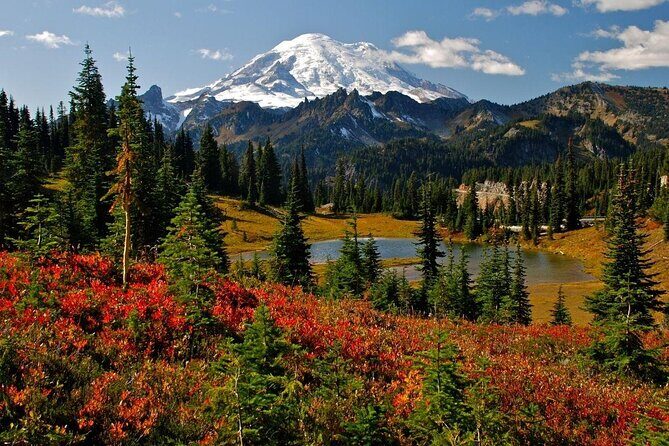
- Paradise glacier hike + picnic: about a mile each way, then you eat near ice and views.
- Waterfalls are built into the day: easy walks to Narada Falls and Christine Falls viewpoints.
- Reflection Lake photo moment: classic mirror views in summer; winter changes the scene.
- Old-growth forest time: lower-elevation forest near Longmire with trees that can be around 1,000+ years old.
- Hike or snowshoe, seasonally: Nov–Jun switches to snowshoes; you’re not expected to know the technique.
- Max 14 people: smaller group energy, more patience at pull-offs and on trail.
Paradise Starts The Day (and Sets the Tone)
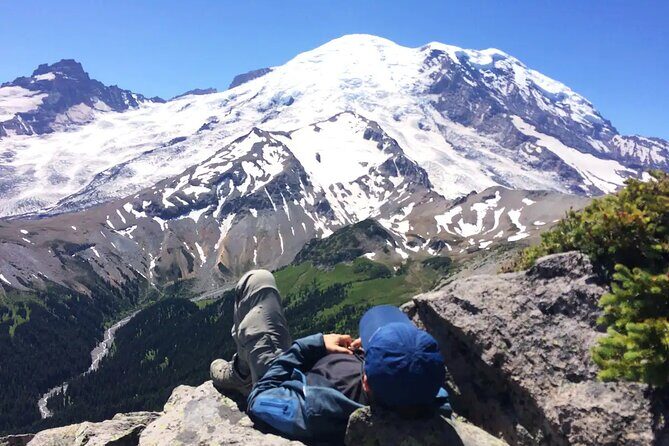
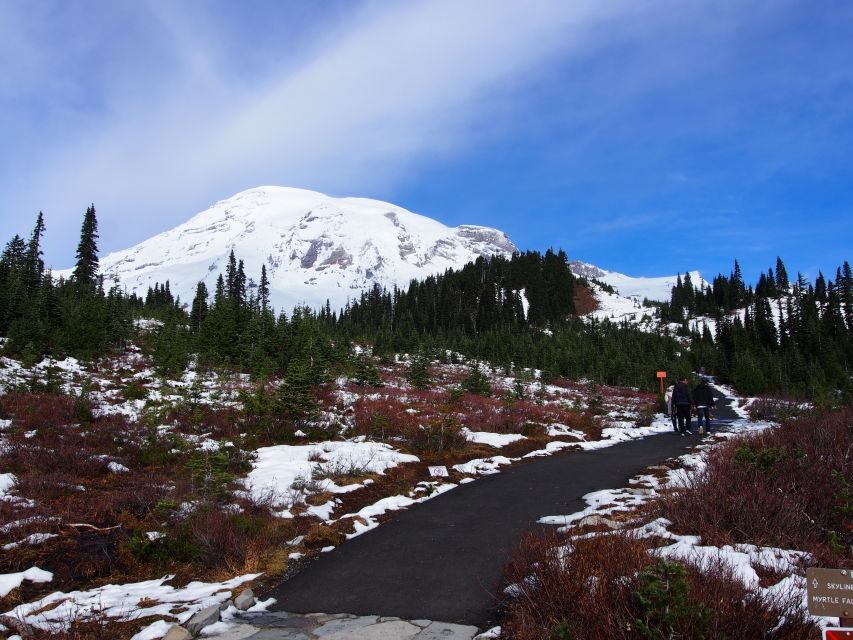
Most Mt. Rainier tours either rush the park or stop at viewpoints only. This one starts with the stuff that makes you feel like you’re really inside the landscape—Paradise, at about 5,500 feet. After a drive from Seattle (plan on roughly 2 hours to get there), you begin at the Paradise Visitor Center area and hike around a mile.
That mile is where the tour earns its keep. It isn’t long on paper, but you’ll work a bit because parts of the trail trend uphill. Then comes the payoff: a picnic spot near giant glaciers where the air feels sharper and the views feel close enough to study. This is the moment I’d plan my whole day around.
After the picnic, you hike back about a mile. Then the tour pivots into “see more, but don’t feel rushed,” with short drives and pull-offs for panoramic views and photo time.
Other Mt Rainier day tours we've reviewed in Seattle
Tip I’d follow
Bring a real wind layer. Even when Seattle feels mild, Paradise can feel cold fast—especially if you’re outside during breaks and photo stops.
Glacier Views and the Glacier Picnic Value
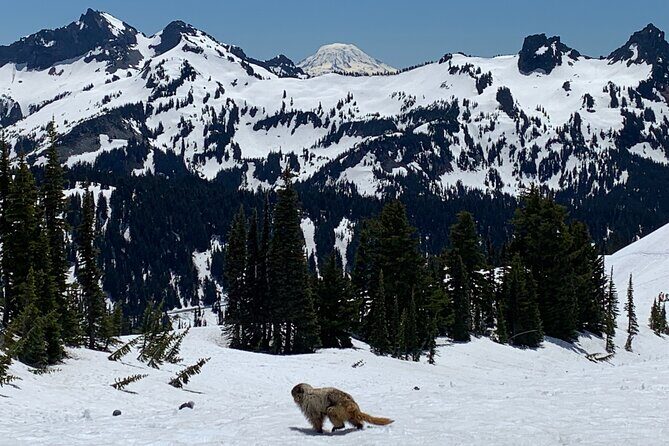
The tour’s glacier plan is simple: get you out of the visitor-center area and into a spot where you can look at the ice and not just admire it from a distance. The picnic setup matters because it slows you down at the right time. You’re not stuck eating on the bus; you’re sitting near something most people only see on postcards.
The tour price is $179 per person, and this is one of those cases where the value isn’t only the entry ticket—it’s the combination of transport + guide + time management. You’re paying for someone to handle the driving, the timed stops, and the “where should we stand for the best views” calls so you can focus on enjoying it.
If you prefer to travel light, you’ll still want to plan your own food. Lunch isn’t included. The good news: there’s a restroom stop where you can grab picnic supplies, and there’s also a cafeteria option at the visitor center.
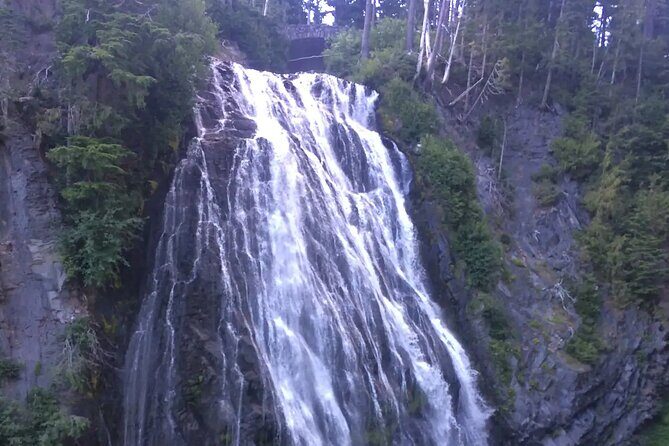
Narada Falls: A Short Walk With a Proper Wow
Narada Falls is one of those stops that feels small in duration and big in impact. You’ll head out for a walk to the bottom of the falls—about a 20-minute stretch of time on-site for the stop.
A key detail: Narada Falls is a 168-foot drop. That number sounds academic until you’re there and the roar takes over your attention. If you’re a photo person, this stop also gives you something different from the glaciers: motion and mist instead of ice and distance.
The main drawback is not the walk itself—it’s timing. If weather shifts, waterfalls can look darker or harder to see. But even when views aren’t perfect, the sound and the scale still land.
Reflection Lakes: Mirror Views in Summer, Frozen Reality in Winter
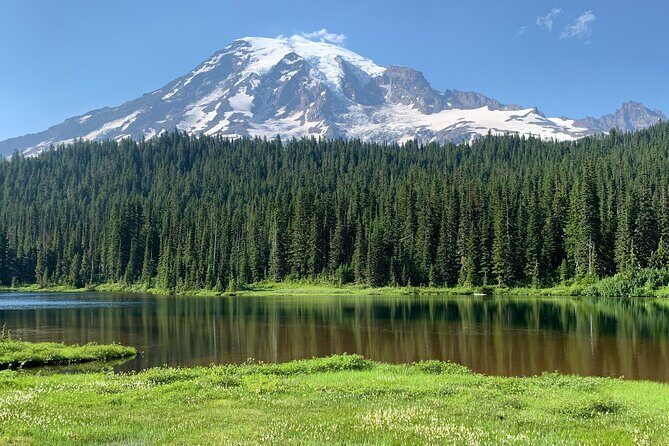
Reflection Lake (often paired with the larger “reflection” views) is the kind of stop you can plan around because it has a clear payoff: Mount Rainier mirrored in the water—especially in summer.
In summer, the lake can deliver those classic photo results. In winter, the story changes. The lake freezes and the road can be closed, so your exact view may depend on conditions. The tour handles this by treating Reflection Lake as a scheduled stop, not a guarantee.
That’s actually useful for you. It means you’re not building your whole day around one fragile photo. You’re getting multiple highlight stops anyway—so even if Reflection Lake isn’t perfect, you’re still earning the glacier + waterfall + forest parts.


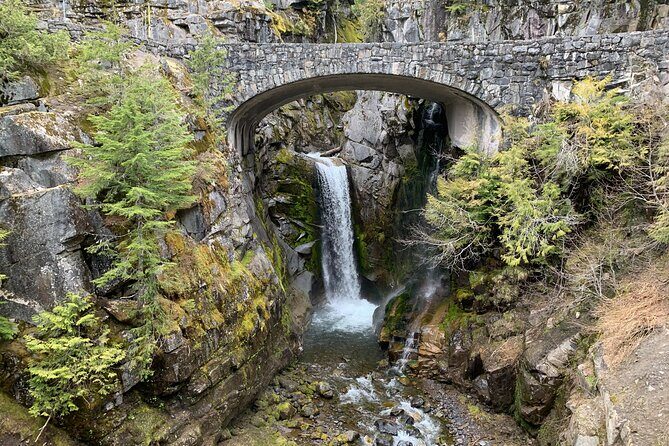
Christine Falls Under an Old Stone Bridge
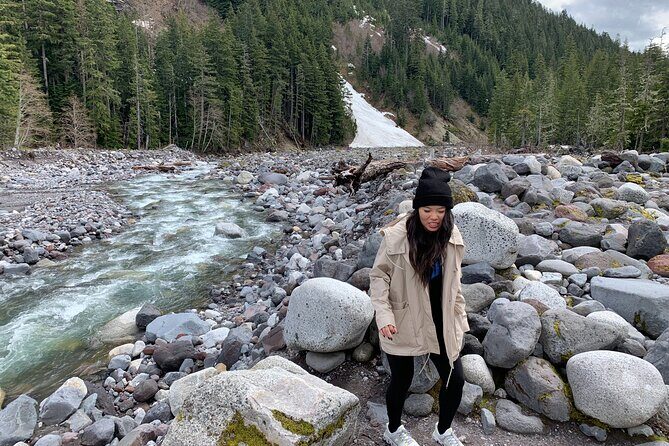
Christine Falls is another strong “short stop, big payoff” choice. You’ll see it from a viewpoint near an old stone bridge, typically after a brief on-foot moment of about 20 minutes.
This falls stop pairs nicely with the glacier theme. Narada gives you the bigger drama. Christine gives you the quieter, framed feel—like the water is staged by the bridge and surrounding terrain. If you like variety in a single day, it works.
If the weather isn’t cooperating, your best bet is to stay flexible with your expectations. Rainier’s charm isn’t only clear skies. Even with clouds, the waterfalls still show up, and the old-growth forest sections still feel special.
Longmire: Old-Growth Forest Without the Crowds-Only Feel
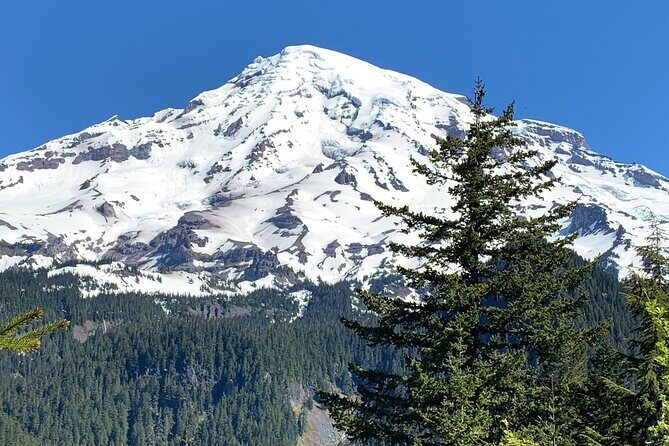
Near Longmire, you get a different side of Mt. Rainier National Park: lower-elevation forest with old-growth trees. This is where the tour adds depth, not just a checklist of views.
You’ll walk for about 30 minutes in that old-growth area. One of the most memorable descriptions I picked up is the sense of scale—trees that are around a thousand years old. In one guide’s story from a previous group outing, I heard about a 1,200-year-old Douglas fir, which gives you an idea of how old this forest can feel.
Practical takeaway: this stop is less about steep exertion and more about slow looking. If you want a break from the hill you climbed at Paradise, Longmire is a welcome change.
What You’ll Actually Do on the Trail: Steep Spots and Snow Gear
Your physical reality here is mostly about expectations. The glacier hike is about one mile in each direction, but multiple people noted the incline can be steep. So treat it like a “short but serious” hike, not a casual stroll.
The tour also adjusts for the season:
- Nov–Jun: snowshoeing instead of hiking (no experience required).
- Gear included: snowshoes and crampons, plus trekking poles.
That crampon detail matters. If conditions are snowy or icy, having the right traction system changes how confident you feel on uneven ground. You’re not just walking on luck.
One more practical note from the day-to-day experience of people who’ve done this: bring good footwear. Even with trekking poles, your knees may feel the uphill sections if you’re sensitive to incline. The tour also isn’t recommended for people with knee or hip problems.
If you’re planning gear
- Wear grippy shoes/boots.
- Bring gloves and a hat if the forecast suggests cold or snow.
- Use the trekking poles if you have them—yes, they help on steep bits.
Seattle Pickup, Small-Group Pace, and the Long Drive Factor
The tour meets in downtown Seattle at 415 Pine St. There’s also an optional pickup/drop-off spot near the Space Needle if you request it. Either way, the goal is convenience: you start close to where you’ll already be.
Duration is listed as about 10 to 11 hours, and that includes real driving time. The trip to Paradise is around 2 hours, and you’ll feel it. People who are used to quick city tours sometimes underestimate this part.
The good news is that the tour design uses that time smartly. You’re not spending the day waiting around in boring transitions. The stops are spaced so you get multiple kinds of scenery: glaciers, waterfalls, mirror lake views, and forest walking. Plus, it’s a small group of up to 14, so you’re less likely to feel like you’re fighting for a window seat or rushing through photo stops.
Small-group meaning
You’ll get a more relaxed rhythm. If you need to slow down on the hike, the guide can adapt the pace. That shows up in how people describe their experiences—patient guidance, time for photos, and enough rest breaks to keep things enjoyable.
Price Check: Is $179 Worth It for a Rainier Day?
Let’s talk value plainly. At $179, you’re paying for:
- Round-trip transport from Seattle (including a long park day)
- A guide to manage stops and hike rhythm
- Included entry/fees (all fees and taxes)
- Included equipment like trekking poles and winter traction gear
- Bottled water and an air-conditioned vehicle
If you’re trying to DIY this, you’d have to solve multiple problems: timing your driving, parking logistics, and choosing short walks that still hit the big highlights. That’s not impossible, but it costs time and stress—and you still might miss the best windows for viewpoints.
So here’s how I’d judge it for you:
- If you want to see multiple Rainier highlights in one day without planning every detail, the price looks fair.
- If you only want one or two viewpoints and don’t care about waterfalls and old-growth forest, it may feel pricey.
The biggest “value driver” is the short hike to the glacier picnic spot plus the structured waterfall and forest stops. That combination is exactly what you’d otherwise struggle to assemble quickly on your own.
Guides, Pace, and How Options Can Help You
Guides really shape how this tour feels. Across past groups, I’ve seen names like Susan, Rachel, John, Nate, and Matt tied to standout experiences. The pattern in what people value most is usually the same: clear guidance, patience on the trail, and smart stop timing for photos.
You may also get a day that includes optional extra walking depending on the group’s energy. Some people reported tougher trails during their visit, which suggests the guide can steer the hike effort up or down. That’s good news if you want control over how hard you work.
Just be honest with yourself. Even when it’s “short,” the incline at Paradise can be demanding. If you show up prepared and willing to take breaks, the day tends to feel rewarding rather than draining.
Should You Book This Mt. Rainier Highlights Tour?
Book it if you want a structured, small-group Mt. Rainier day that hits the main emotional moments: glaciers up close, waterfalls, reflection-style scenery, and old-growth forest walking. It’s especially appealing if you don’t want to manage logistics from Seattle or if you’d rather let a guide handle the stop-by-stop decisions.
Skip or reconsider if:
- You have knee or hip problems or you know uphill hiking will flare you up.
- You hate long road days. The drive time is real and it stretches the day.
- You only want effortless viewpoints. The Paradise portion includes an uphill walk, even though it’s short.
If you’re in that middle zone—moderate fitness, curious about glaciers and waterfalls, and happy to bring your own picnic—this tour is a strong, practical way to see Mt. Rainier without turning the day into a planning project.
FAQ
How long is the tour?
The experience runs about 10 to 11 hours, including the drive between Seattle and Mt. Rainier.
What will I be doing at Paradise?
You’ll hike from the Paradise Visitor Center area for about a mile, picnic near the glaciers, then hike back about a mile.
Is lunch included?
No. Lunch food isn’t provided. You can bring your own picnic, and there’s a restroom stop where you can buy to-go food. There is also a cafeteria at the visitor center.
Do I need hiking experience in winter or spring?
No. In winter and spring (Nov–Jun), the tour uses snowshoeing instead of hiking, and no snowshoe experience is required.
Where is the pickup in Seattle?
Pickup is at 415 Pine St in downtown Seattle. If requested, pickup/drop-off can be near the Space Needle.
Is this tour suitable for knee or hip issues?
It’s not recommended for travelers with knee or hip problems, since there is hiking or snowshoeing on uneven terrain and some sections can be steep.
If you tell me what month you’re going and your hiking comfort level, I’ll help you decide how aggressive your expectations should be for the Paradise portion.