REVIEW · HISTORICAL TOURS
Seattle Downtown Quest: Self-Guided History Adventure
Book on Viator →Operated by Questo · Bookable on Viator
Downtown Seattle turns into a puzzle. This self-guided quest is interesting because you learn history by hunting for answers right on the sidewalks. I like the 10 interactive puzzle challenges tied to real landmarks, and I like that there’s no guide needed—you just use your phone and keep moving. One drawback to consider: if a specific spot is under construction or a landmark is temporarily missing, the clue can be harder to find, so bring patience (and use the hint button if it’s offered).
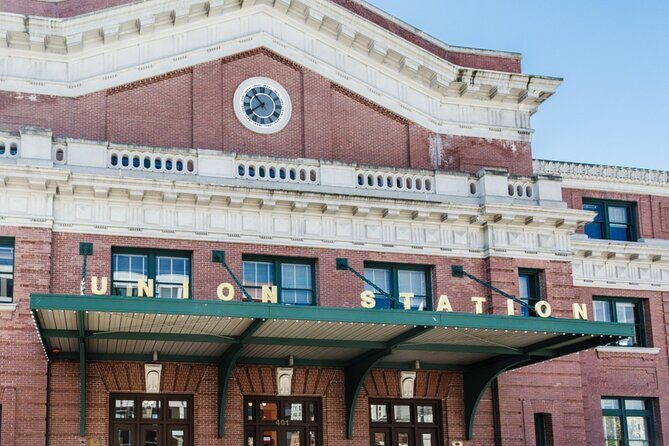
The walking route runs from Union Station to Waterfront Park, and you can pause and resume whenever you want. It’s designed to work without maps or GPS, which makes it a decent option when you’re short on time but want more than just looking at buildings.
For $7.20 per person, this feels like a low-cost way to connect Seattle’s big eras—Gold Rush-era ambition, early civic architecture, and downtown art and markets—into one easy 90-minute loop.
In This Review
- Key Things I’d Know Before You Go
- How This Quest Feels in Real Life (No Guide, Just Clues)
- Your Route: Union Station to Waterfront Park (A Walkable History Loop)
- Stop 1: Klondike Gold Rush National Historical Park and Duane Pasco’s Totems
- Pioneer Square: Romanesque Buildings, Underground Stories, and Small-Park Breaks
- Smith Tower: A Downtown Landmark You Can Measure With Your Own Gaze
- Seattle Federal Office Building (1933): Early Civic Power in Stone
- Eyes on You: A Practical Stop With a Personal Topic
- Seattle Art Museum Origins: From 1905 Groups to the Art Institute
- Pike Place Market: A Neighborhood, Not Just a Market
- Beneath the Streets: City Birth, 1890s Architecture, Skid Row, and Coast Salish Presence
- How the Puzzle Format Works (And Why It’s Often Better Than Reading Signs)
- Price and Value: $7.20 for a 90-Minute Downtown Game
- Who This Seattle Quest Fits Best
- Should You Book the Seattle Downtown Quest?
- FAQ
- How long is the Seattle Downtown Quest?
- Where does the quest start and end?
- How much does it cost?
- Do I need a guide, maps, or GPS?
- What do I get with the ticket?
- What language is the quest offered in?
Key Things I’d Know Before You Go
- Phone-code entry, not a meetup: you start with a mobile access code instead of waiting for someone holding a flag.
- 10 puzzle stops across downtown: you’re not just reading facts—you’re spotting details and solving short challenges.
- No maps or GPS required: the route is meant to be self-contained, which helps when you want minimal friction.
- Pioneer Square to Pike Place in one go: you cover a lot of iconic neighborhoods without needing rides between areas.
- Hints can save your day: at least some clues are solvable faster if you choose to ask the app for help.
How This Quest Feels in Real Life (No Guide, Just Clues)
This is the kind of activity that works well when you want structure but not babysitting. Instead of a live guide talking at you, you’ll get a mobile storyline and short tasks that push you to look closely: signs, building details, and the kind of objects you’d otherwise walk past.
The biggest practical upside is control. You can complete the quest at the pace you want, and you can pause and resume anytime. In Seattle, that’s smart. Weather changes fast. Also, you might get tempted by coffee stops near Pioneer Square or snacks at Pike Place.
You should also know what the experience is not. It’s not a guided Underground Tour and it’s not a museum walkthrough. It’s a downtown history game. If you love puzzles, you’ll probably have a good time. If you strongly prefer factual narration with no searching, you might find some moments slow—especially when a clue is hard to locate.
Other Seattle tours we've reviewed in Seattle



Your Route: Union Station to Waterfront Park (A Walkable History Loop)
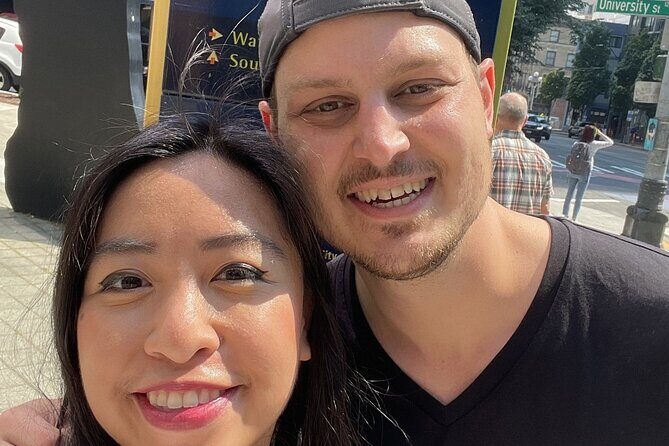
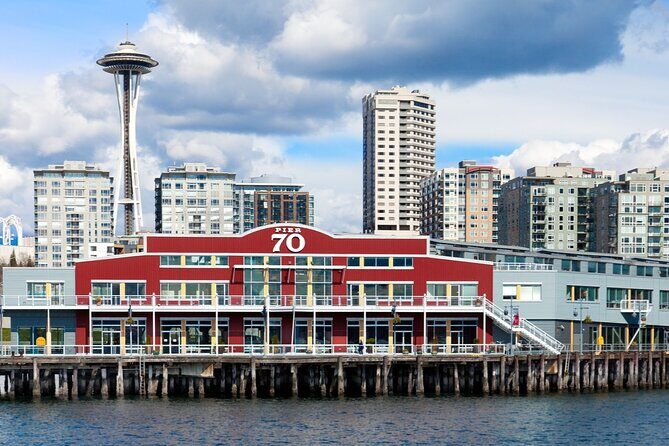
The quest starts at Union Station (401 S Jackson St) and ends at Waterfront Park (1401 Alaskan Wy). That’s a useful stretch because it threads through some of Seattle’s most recognizable downtown areas: Pioneer Square, Pike Place Market, and the nearby cluster of civic and cultural stops.
Duration is listed at about 1 hour 30 minutes, but with puzzle-style activities, your actual timing depends on two things:
- how often you need a hint
- whether construction or temporary changes affect a clue spot
So I treat this as a 90-minute window with wiggle room. If you finish early, you’ll have time left for a quick coffee or a market snack. If you need more time, you’re still in a walkable zone where you can reset easily.
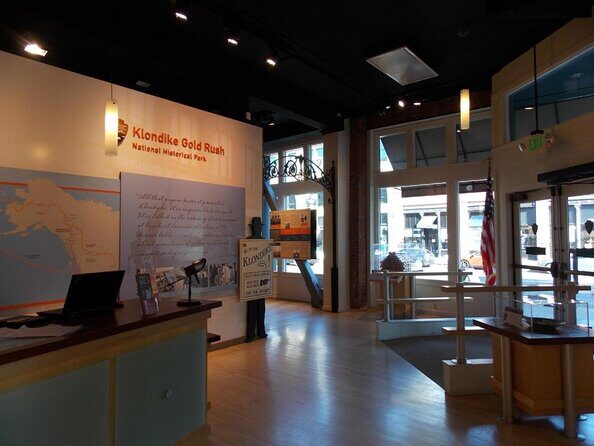
Stop 1: Klondike Gold Rush National Historical Park and Duane Pasco’s Totems
Your first real history hit comes at Klondike Gold Rush National Historical Park. Here, the quest nudges you to look around and find answers before moving on.
This stop is especially strong because it connects the Gold Rush era to Seattle’s public art and interpretive storytelling. The park’s totem poles and woodcarvings are credited to Duane Pasco (1970s). They were donated by Richard White and installed in the 1980s.
The details you’ll run into are the kind that make Seattle feel layered:
- The tallest totem, Sun and Raven, tells the Raven theft-of-the-moon story. It was created for the 1974 Spokane World’s Fair.
- Man Riding on Tail of Whale was carved in 1971.
- Another figure, Tsonoqua, is described as a mythological giantess and an invoked “nightmare bringer” used by North Coast mothers to get kids to obey.
Why this stop matters for you: the quest isn’t only teaching “what happened.” It’s showing how stories travel—through art, public space, and repeated retelling. And because the task is about finding answers by looking, you’ll likely notice carvings and inscriptions that you’d otherwise miss.
Watch-outs: park spaces can change. If something is temporarily unavailable or blocked, the clue may be harder. When you hit that situation, don’t overthink it—use hints if they’re available and move on rather than losing half your afternoon.
Pioneer Square: Romanesque Buildings, Underground Stories, and Small-Park Breaks
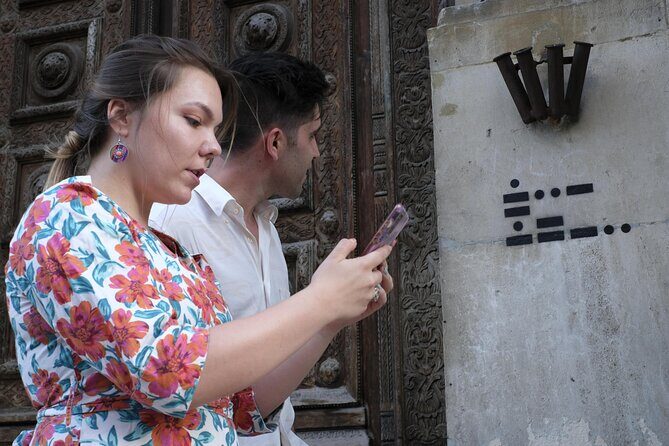
From there, you head into Pioneer Square, a neighborhood defined by late-1800s Romanesque Revival buildings. The quest framing is practical: you’ll see how the downtown “roots” connect to the larger Klondike Gold Rush story.
What’s great here is the mix of old and lived-in. Pioneer Square isn’t frozen in time. It’s full of things you can do while you’re between puzzle tasks—coffee shops, galleries, and trendy bars.
A few specific anchor points to look for:
- Subterranean history: visitors often explore the Underground Tour, which connects to Seattle’s early development story.
- Waterfall Garden Park: a quieter pause point if you want a breather.
- Occidental Square: known for open-air seating and food trucks.
For your puzzle strategy, Pioneer Square is one of the better-feeling areas. You’ll be around signs, architectural features, and gathering points, so there’s plenty to scan visually without feeling like you’re searching in the wrong place.
Possible drawback: the pace can feel slower if a clue depends on a specific feature that’s blocked off for construction or removed for repair. This is one reason I like having a short attention span break planned—grab a coffee and then come back with fresh eyes.
Smith Tower: A Downtown Landmark You Can Measure With Your Own Gaze
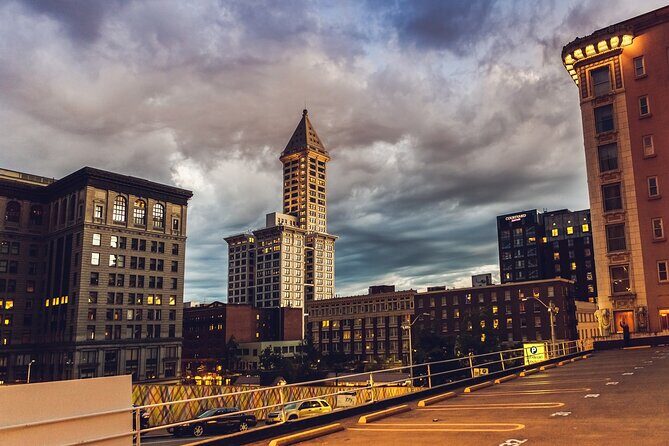
Another big stop is Smith Tower, in the Pioneer Square area. It’s a skyscraper finished in 1914, with 38 stories and a height of 484 ft. The listing also notes it’s the oldest skyscraper in Seattle and among the tallest outside New York City at the time it opened.
Why this works in a self-guided format: tall buildings give you scale. Even without going inside, you can use height, age, and the surrounding streets as context. The quest’s “look around and find the answer” method tends to work well with landmarks like this because there’s a lot to visually confirm—forms, design cues, and the feel of early 20th-century ambition.
If you’re the type who likes “big downtown icons,” you’ll probably enjoy the way this stop punctuates the walk.
Other guided tours in Seattle






Seattle Federal Office Building (1933): Early Civic Power in Stone
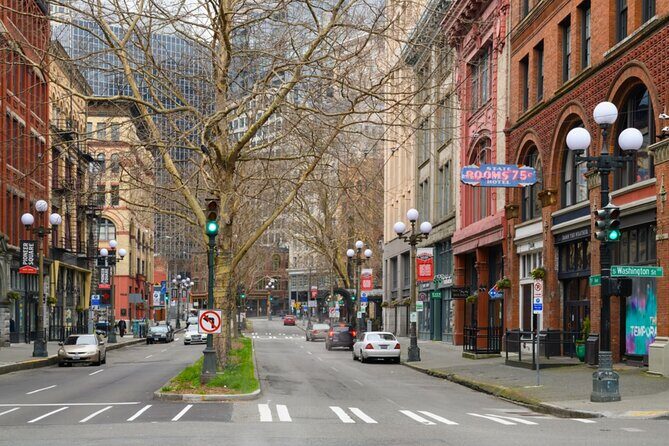
Next you’ll encounter the Seattle Federal Office Building (FOB), built in 1933. The quest notes it was the first building in Seattle designed specifically for offices of the federal government.
The naming-level detail matters here: the designer of record was James A. Wetmore, from the Department of the Treasury’s Supervising Architect office. The first tenants included 52 federal agencies, with the Department of the Treasury described as the largest.
This is a less “pretty” stop than Pike Place or a park, but it’s valuable because it shows how downtown power was organized. For you, the point is simple: history in Seattle isn’t only about gold or markets. It’s also about paperwork, government, and the buildings that house it.
In a puzzle format, you’ll likely be trained to spot specific clues connected to those facts. If you’re tired of searching, this one can reset your brain because it’s anchored to a single standout structure.
Eyes on You: A Practical Stop With a Personal Topic
One of the mid-quest stops turns toward health and service: Eyes on You medical center. The quest description frames it as a place where eye care professionals specialize in how the eye works, vision conditions (including ones without obvious symptoms), and a history worth learning.
The good part for you: this breaks up the “architecture only” vibe. It reminds you that downtown history includes businesses and medical services, not just landmark buildings.
One note: the specific historical details aren’t spelled out in the information you have here, so treat this stop as a “read and look” checkpoint. When you arrive, slow down long enough to scan what’s in front of you and follow the app’s instructions.
Seattle Art Museum Origins: From 1905 Groups to the Art Institute
You’ll also reach the Seattle Art Museum (SAM) area, with a storyline about origins. The quest notes SAM traces its roots to:
- the Seattle Fine Arts Society organized in 1905
- the Washington Arts Association organized in 1906
- their merge in 1917 while keeping the Fine Arts Society name
- a rename to the Art Institute of Seattle in 1931
- the Art Institute housing its collection in Henry House, tied to collector and founder Horace C. Henry (1844–1928), connected to the Henry Art Gallery
For many people, art museums feel like “just go in when the weather’s bad.” This clue-style approach flips that. You’re learning the institution’s origin story in the street before you ever settle into art appreciation mode.
This stop is also a good choice if you like Seattle’s civic identity: the city didn’t just build offices and skyscrapers. It also organized to build art culture.
Possible drawback: museum-area clues can be affected by construction or signage changes. If you notice temporary barriers, don’t treat that as a personal failure. Move with flexibility and keep an eye out for updated hint cues in the app.
Pike Place Market: A Neighborhood, Not Just a Market
The quest then reaches Pike Place Market, described as more than a public market—it’s a community inside downtown. You’ll see references to:
- hundreds of farmers, craftspeople, small businesses, and residents
- preservation of historic buildings and the character of the nine-acre historic district
- support for farmers, artisans, and small businesses
- a city charter role to provide services for low-income individuals
This is where the quest tends to feel most rewarding because it’s easy to understand why the area matters. You’re walking through a place with real everyday energy: people working, buying, selling, and living nearby.
You’ll also hit Victor Steinbrueck Park at the north end of Pike Place Market. The description paints it as a mix of neighborhood residents, visitors, tourists, and workers relaxing on lawns, benches, and tables—especially on a summer afternoon.
For your enjoyment: treat this segment as both puzzle time and people-watching time. Even if you’re focused on solving, allow yourself a short break for a market snack or coffee. The quest’s puzzle rhythm works better when you’re not sprinting.
Beneath the Streets: City Birth, 1890s Architecture, Skid Row, and Coast Salish Presence
Your last storyline stop is Beneath the Streets. The quest description emphasizes factual, historical information tied to Seattle’s formation.
It points to several themes you’ll encounter:
- the birth of the city
- 1890’s architecture
- stories including the Klondike Gold Rush
- Skid Row
- the Coast Salish Peoples who first inhabited the area
This is a strong finale because it broadens the scope. You’re not only learning about a few famous buildings. You’re learning how Seattle’s story includes communities, hardship, and deep roots before downtown became what it is today.
If you like history that connects the past to the present, this ending will land best.
How the Puzzle Format Works (And Why It’s Often Better Than Reading Signs)
The quest includes 10 interactive puzzle challenges and storyline content tied to major events. The mechanics are designed around observation: you look around, find the answer, then move to the next location.
A few practical tips that will help you finish without frustration:
- Plan on using your phone screen while you’re standing still. Don’t walk and scan at the same time.
- Treat each stop like a mini photo scavenger hunt: look for the item or detail the app wants.
- If you hit a wall, look for the hint option. At least one review notes hints were available and helpful.
Because the experience uses mobile access, you’ll want your phone charged. Seattle power outlets aren’t hard to find, but having a low battery is an easy way to turn a fun challenge into a stressful one.
Price and Value: $7.20 for a 90-Minute Downtown Game
At $7.20 per person, this is priced like a budget-friendly activity. The value comes from two things.
First, you’re paying for walking time plus guided-style context—without paying for a live guide. Second, the puzzle structure gives you a reason to stay engaged for the full loop, rather than drifting.
Is it a “worth it” deal for everyone? Here’s my honest take. It’s great if:
- you enjoy puzzles or scavenger-hunt style tasks
- you want to cover a lot of ground in a short window
- you like learning while you’re moving
It’s less great if:
- you hate searching for small details
- you’re traveling on a tight schedule where delays hurt
- you strongly prefer a classic guided tour voice-and-headphones format
One caution from the experience record: a few people ran into app access problems or trouble finding specific clues when spots were impacted by construction or missing landmarks. That doesn’t mean you’ll face it. It does mean you should go in with realistic expectations and a plan to troubleshoot quickly.
Who This Seattle Quest Fits Best
You’ll likely enjoy this most if you’re:
- a small group (or solo) who wants a self-directed plan
- someone who likes a mix of architecture, art, markets, and short historical facts
- visiting Seattle for the first time and want a “great hits” downtown walking day
I’d also say it’s a smart way to break up a day that already includes more classic attractions. Think of it as the puzzle-charged layer that turns downtown stops into a story you can recall later.
If you’re someone who needs a perfectly signposted experience and zero uncertainty, you might find the self-guided format annoying when landmarks shift or clues are harder to spot.
Should You Book the Seattle Downtown Quest?
I’d book it if you want an affordable, phone-based history walk from Union Station to Waterfront Park with 10 puzzle stops and no guide. For $7.20, it’s a fun way to make downtown feel like more than a list of places to stand in front of.
I wouldn’t book it if you’re the type who gets stressed by missing signs, construction barriers, or app hiccups. In that case, I’d pick something with a live guide or a museum-focused plan, so you’re less exposed to real-world changes.
If you do book: charge your phone, wear walking shoes, and plan for the possibility that one or two puzzle points might be tricky to access.
FAQ
How long is the Seattle Downtown Quest?
It’s listed at about 1 hour 30 minutes.
Where does the quest start and end?
It starts at Union Station (401 S Jackson St, Seattle) and ends at Waterfront Park (1401 Alaskan Wy, Seattle).
How much does it cost?
The price is $7.20 per person.
Do I need a guide, maps, or GPS?
No physical tour guide is included, and the game requires no maps or GPS.
What do I get with the ticket?
You get a mobile access code, 10 interactive puzzle challenges, and story content about Seattle’s historical events. You can also pause and resume anytime.
What language is the quest offered in?
It’s offered in English.