REVIEW · SPACE NEEDLE TICKETS
Space Needle & Seattle Center Small Group Private Walking Tour
Book on Viator →Operated by WeVenture Seattle Private Tours · Bookable on Viator
Seattle has a way of packing stories into small distances. This private walking tour is a smart way to get your bearings around Seattle Center and the Space Needle, with a guide who stitches art, science, and music together while you walk.
Two things I really like: you get undivided attention from your guide (it’s only your group), and you’re not just looking at landmarks—you hear why they matter. A possible drawback: some spots are mainly “pass-by” moments, so if you want lots of hands-on museum time, you may want to add extra time on your own.
If you’re visiting for the first time, or you just want to see Seattle Center the way locals think about it, this tour does the job. It’s about 2 hours total, with a timed Space Needle ticket built in, so you’re not playing guessing games with crowds and schedules.
In This Review
- Key highlights to know before you go
- Why Seattle Center is the perfect place to start
- Your Space Needle visit, timed and explained
- The walking route: arts and history stops that add meaning
- The Chihuly glass art connection
- A science stop built for hands-on curiosity
- Ballet, opera, and the big-stage ecosystem
- A theatre with a mission for new voices
- Cornish College of the Arts, founded in 1914
- Music lovers: KEXP, records, and the story behind Seattle bands
- International Fountain and the 1962 World’s Fair vibe
- Passing big venues without feeling lost
- What you gain from private small-group attention
- Price and value: what $161.50 per person really includes
- Practical timing: how the 2 hours tends to feel
- Who should book this tour (and who might not)
- Should you book the Space Needle & Seattle Center tour?
- FAQ
- How long is the tour?
- Is this a private tour?
- What does the price include?
- Do I get timed entry to the Space Needle?
- Where does the tour start and end?
- Do I need to bring tickets?
- Are food and drinks included?
- Are service animals allowed?
- What if I need to cancel?
- Are all locations guaranteed to be full stops?
Key highlights to know before you go

- Private, only-your-group tour with a local guide focused on your pace and questions
- Timed Space Needle entry included, plus design context from the 1962 World’s Fair
- A walk through arts, science, and music landmarks around Seattle Center
- International Fountain views with Century 21 Exposition nostalgia baked in
- Short stops where you can read the city’s culture better than you can alone
Why Seattle Center is the perfect place to start
Seattle Center is one of those places where the layout basically tells you a story. It started as the big stage for the 1962 World’s Fair (the Century 21 Exposition), and even now you can feel that “showplace” energy. The tour begins here, in the Queen Anne neighborhood area of Uptown Seattle, right where the cultural institutions, sports venues, and performing arts buildings cluster together.
This is an especially good start if you’re still learning the geography. Seattle can feel spread out. Seattle Center compresses a lot into a compact walk: pop culture energy, serious arts, family-friendly science, and the big landmark that people come for in the first place—the Space Needle.
You also get to do something I love on city walks: you get a guide to point out what you’d otherwise miss. From public art to architecture, this area rewards slow attention. With a guide, you don’t need to guess why a building exists or what it represents.
Other Seattle tours we've reviewed in Seattle


Your Space Needle visit, timed and explained
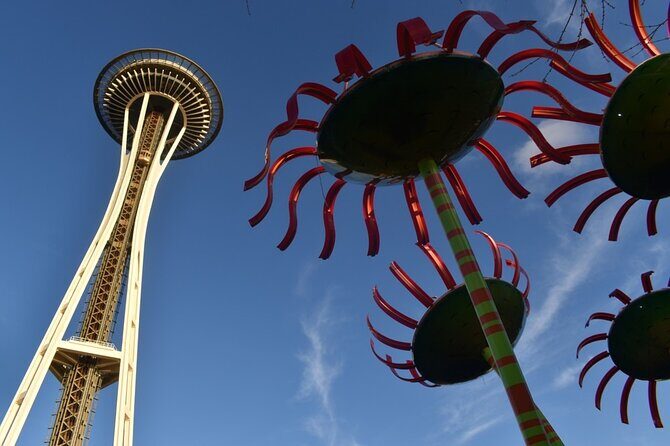
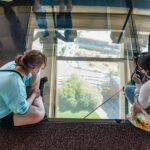
The Space Needle part is the headline, but the real value is what happens around it. After your walking portion, you get timed entry to the Space Needle viewing platform. That timing matters because it turns the visit from a maybe-forever wait into a planned stop.
Your guide also gives you the story behind the structure—its design choices and its original purpose for the 1962 World’s Fair. When you’re actually on the platform, that context makes your photos better. You start noticing the “why” behind the iconic shape, instead of just snapping a picture and moving on.
And yes, you’ll get the big panoramic payoff you came for. The view is the main event. But the better part is stepping into the city from a viewpoint where you can see how all these neighborhoods and landmarks connect back to the Seattle Center campus.
The walking route: arts and history stops that add meaning
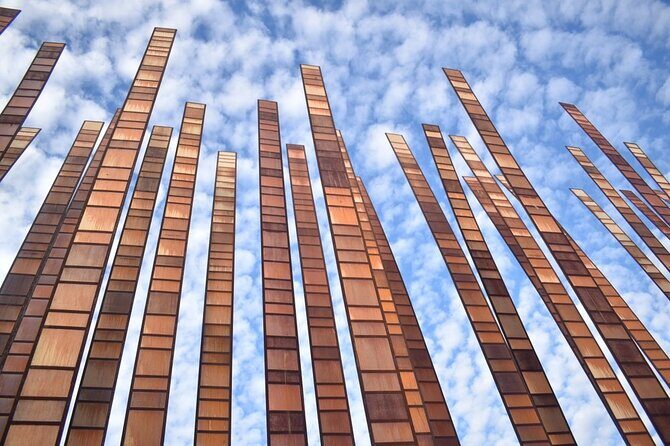
Between Seattle Center and the Space Needle timed window, the walk includes a mix of serious culture, kid-friendly science, and performing arts. Even when you’re not going inside every building, you’re still getting the narrative.
Here’s what the route focuses on:
The Chihuly glass art connection
You’ll pass by a museum and studio famous for glass sculptures made or designed by Dale Chihuly. Even if you don’t spend time inside, this is worth clocking. Chihuly’s work is all about light and color—so it pairs naturally with the Seattle Center setting, where outdoor space and public art sit right next to major indoor institutions. If you later decide you want to see more glass in person, you’ll know exactly where to return.
A science stop built for hands-on curiosity
You also pass a kid-friendly science museum with interactive exhibits, plus major attractions like Laser Dome and IMAX theaters. What I like about including this kind of stop on a cultural walking day is balance. Seattle Center can lean arts-heavy. Adding science keeps the tour from becoming one long “look at buildings” exercise. It also helps you picture the center as something families actually use, not just something adults photograph.
Other Space Needle tickets we've reviewed in Seattle






Ballet, opera, and the big-stage ecosystem
The itinerary includes multiple performing arts landmarks—ballet and opera in particular. You’ll pass by the highly regarded ballet company that puts on The Nutcracker in wintertime, and you’ll also pass the major performing arts hall linked to Seattle Opera and Pacific Northwest Ballet.
Then there’s the bigger opera complex angle, with references to major works such as Wagner’s Der Ring des Nibelungen and Carmen since the 1960s. Even without going inside, these are the kinds of details that change how you look at a space. Instead of “that’s a theater,” you start thinking “this is a place where major productions have lived for decades.”
A theatre with a mission for new voices
Another stop area centers on a theatre that has staged works by August Wilson and F. Scott Fitzgerald, and that now emphasizes plays by Black and female playwrights. That matters on a tour like this because it shows Seattle isn’t just preserving history—it’s shaping what gets performed now.
Cornish College of the Arts, founded in 1914
You’ll pass the 1914 institution run by Cornish College of the Arts, with programs in art, design, dance, theatre, and more. This is one of those “wait, Seattle has this much arts education history” moments. It’s a good reminder that great arts cities aren’t just built on big donors and big venues. They also run on training and schools.
Music lovers: KEXP, records, and the story behind Seattle bands
If you care about music, this part of the walk is one of the most fun. The tour makes time to walk over to a small record shop and label located inside the KEXP gathering space, where you can look for vinyls for your favorite artists.
That’s not just a retail stop. It’s a way of grounding Seattle’s music scene in a real place where the culture is still active. You’re not reading about Seattle bands. You’re standing in the ecosystem that helps keeps that scene humming.
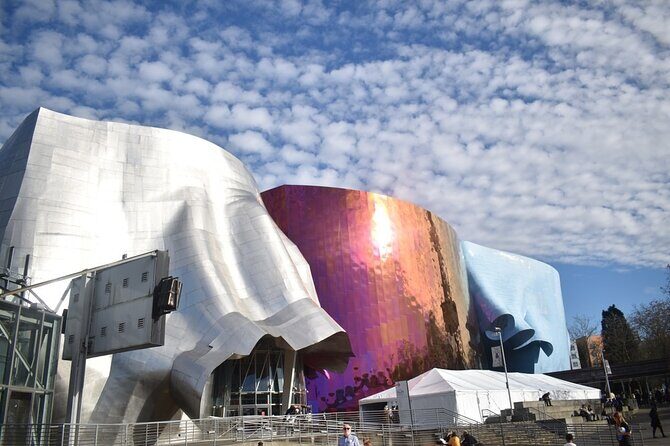
The walk also includes passing by an institution dedicated to preserving music history, with exhibits about famous Seattle artists and bands plus lots of memorabilia and artifacts. That’s exactly the sort of “I didn’t know this existed” stop that helps first-time visitors connect Seattle’s reputation to actual names, objects, and timelines.
International Fountain and the 1962 World’s Fair vibe
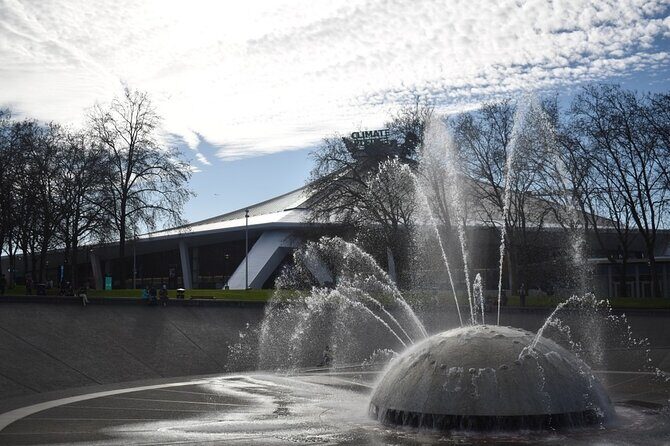
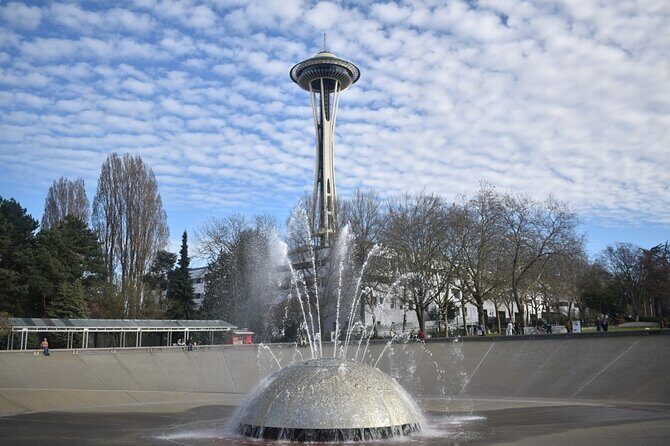
One of the most visually satisfying parts of Seattle Center is the International Fountain. The tour includes a chance to relax there and take in the landmarks tied to the Century 21 Exposition era. There’s also a musical fountain angle with epic views toward the Space Needle, installed for the 1962 World’s Fair.
I like that this isn’t only a photo-op moment. It’s a breathing point. After walking through buildings and explanations, the fountain gives you a slower, sensory break. If you’re traveling with another person, it’s also a natural chance to ask questions to your guide without feeling like you’re holding up the group.
Passing big venues without feeling lost
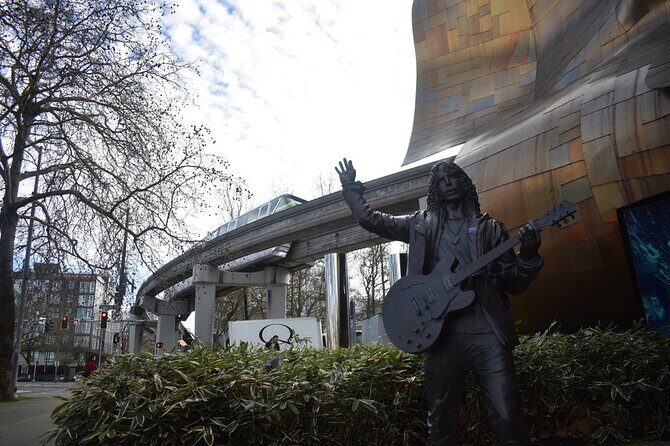
This tour moves through an area with major venues—sports, theatre, arenas—so it can feel like you’re walking through a modern campus of landmarks.
You may pass by:
- a sports arena known as home of the Seattle Kraken, noted for its innovative sustainable design
- a theatre intended for young audiences, with a year-round drama school for aspiring young artists
And that’s where the tour’s private format helps. Even if you’re mostly passing these places from the outside, your guide can explain what each venue is known for and how it fits the Seattle Center story. You leave with a mental map, not just a phone camera full of buildings.
What you gain from private small-group attention
This is where the tour earns its price tag. In a group tour, you often spend half your time watching where everyone else is going. Here, it’s only your group, so your guide can slow down for questions or speed up when you’re ready.
You also get some genuinely practical guidance. One of the strongest signals from past experiences: guides can respond to real-life needs on the spot. For example, Sam was praised for being helpful and friendly, even bringing umbrellas when the weather turned.
And guide style matters. William Forland was specifically singled out for being kind and well-informed. That kind of person-to-person difference is a big deal because the content isn’t just facts—it’s the way the facts are organized for you while you walk.
Price and value: what $161.50 per person really includes
At $161.50 per person, this isn’t a budget stroll. You’re paying for three things that add up fast: a local guide, your Space Needle admission, and the timed-entry convenience.
A normal approach to doing this on your own often looks like this:
- buy your Space Needle ticket
- research what to see around Seattle Center
- try to figure out a walking route
- then spend time piecing it together on the fly
Here, you get a planned flow that pairs Seattle Center landmarks with the Space Needle timed visit. That’s valuable if you don’t want to spend your limited vacation time on ticket logistics and route decisions.
Also, this tour has strong demand. It’s booked on average 61 days in advance, so if you want specific days or smoother timing, plan ahead.
Practical timing: how the 2 hours tends to feel
The full experience is about 2 hours. You start at 300 Harrison St, Seattle, WA 98109, and you end back at the meeting point.
A good mental model:
- you spend about an hour in Seattle Center as your base for the walk and stories
- then you move into your timed Space Needle window
Between those anchor blocks, you pass multiple cultural buildings and landmarks. Some are described as stops and some as pass-bys, and not all locations are guaranteed as full stops. That’s normal for walking tours in a real city—space, schedules, and flow matter.
Who should book this tour (and who might not)
This tour is best for:
- first-timers who want Seattle Center and the Space Needle without turning it into a research project
- people who want a guide’s context while keeping the day simple
- couples or small groups who prefer private pacing over waiting for others
You might think twice if:
- you want long, inside-the-museum time at multiple attractions (this walk includes timed access and key passes, not a full museum day)
- you’re the type who loves reading maps and building your own self-guided route (you can do that here, but you’ll miss the “why this matters” layer)
Should you book the Space Needle & Seattle Center tour?
If you want an efficient first look at Seattle’s cultural heart, I’d book it. The timed Space Needle admission, the private format, and the way the route connects arts, science, and music give you more than a standard landmark visit. It’s also a solid choice when you’d rather spend your energy looking at the city than planning it.
Just go in with the right expectations: it’s a guided walk with a timed highlight, not a long museum marathon. If that matches your style, this is a strong value way to experience Seattle Center—and leave with a clear mental picture of how the city’s creative side fits together.
FAQ
How long is the tour?
It runs for about 2 hours.
Is this a private tour?
Yes. Only your group participates.
What does the price include?
A local guide and Space Needle admission are included, along with the Seattle Center stories, plus visits connected to Seattle music history and time at the International Fountain.
Do I get timed entry to the Space Needle?
Yes. Your guide sets you up with timed entry for the Space Needle viewing platform.
Where does the tour start and end?
It starts at 300 Harrison St, Seattle, WA 98109, and ends back at the meeting point.
Do I need to bring tickets?
You’ll use a mobile ticket.
Are food and drinks included?
No. Food and drink are not included.
Are service animals allowed?
Yes, service animals are allowed.
What if I need to cancel?
You can cancel for a full refund up to 24 hours in advance of the experience start time.
Are all locations guaranteed to be full stops?
No. Not all locations listed are guaranteed stops.