REVIEW · CRUISES & BOAT TOURS
Seattle Summer Views Cruise
Book on Viator →Operated by Argosy Cruises · Bookable on Viator
Seattle looks different from water. This 1.5-hour Elliott Bay cruise from Argosy turns the city into a smooth, photo-friendly loop, with Space Needle views and big-name landmarks sliding by at golden hour. I also like the low-key vibe: the narration is limited, so you can chat, snack, and just enjoy being out on the water.
One possible drawback: on popular departures it can get crowded, and the storytelling level is intentionally light—great if you want calm, less great if you want a stop-by-stop lecture.
In This Review
- Key things to know before you board
- Why an Elliott Bay sunset cruise feels like a smart Seattle shortcut
- What happens during the 1.5 hours on the water
- Pier-by-pier skyline views: Great Wheel, downtown, and the waterfront “aha” moment
- Myrtle Edwards Park: Seattle’s green edge from Elliott Bay
- The Space Needle photo moment you actually get on this cruise
- Terminal 91 and Harbor Island: the working-port side of Seattle
- Olympic Mountains, Puget Sound, and the Mount Rainier visibility gamble
- Alki Point Lighthouse and West Seattle from the water
- Onboard vibe: seating, restrooms, and the reality of bar lines
- How much is this $57.42 worth for your Seattle time?
- Who should book the Seattle Summer Views Cruise (and who should consider alternatives)
- Should you book it or skip it
Key things to know before you board
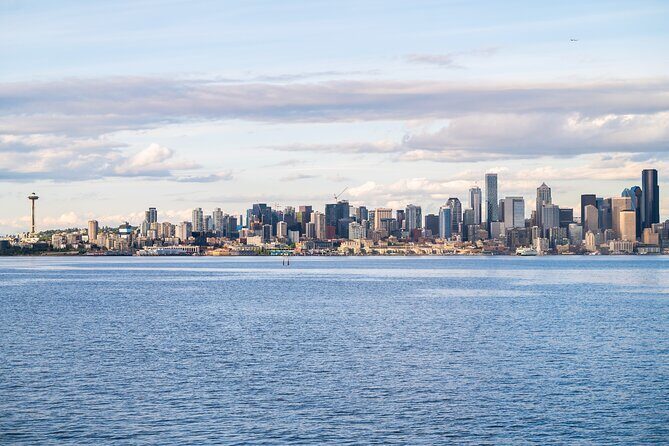
- Golden hour timing: the route is designed for sunset light over Elliott Bay and Puget Sound.
- Landmark views without the crowds: you’ll see the skyline from the water with a quieter feel than the waterfront.
- Alki Point Lighthouse + West Seattle: lighthouse photos and industrial port sights come together in one ride.
- Indoor and outdoor seating: you can choose wind-and-rails views or a cooler indoor spot when needed.
- A practical length: 1.5 hours is long enough for photos, short enough to keep the evening flexible.
- Light narration style: ideal for relaxing; not ideal if you want lots of site-by-site facts.
Why an Elliott Bay sunset cruise feels like a smart Seattle shortcut
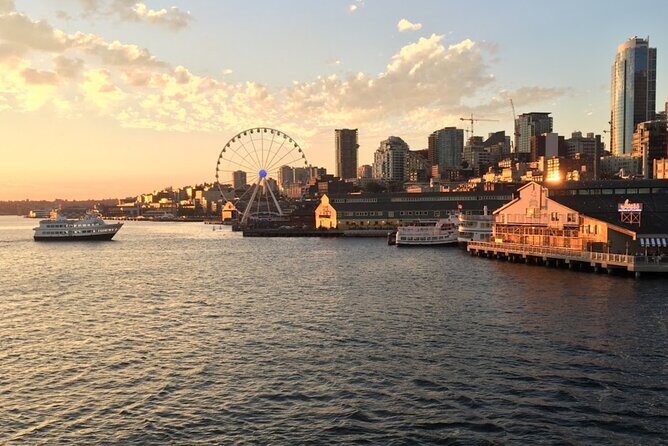
If you’re new to Seattle, this is a fast way to get oriented. You don’t just see downtown—you watch it relate to the water, the neighborhoods, and the distant mountains, all in one continuous ride.
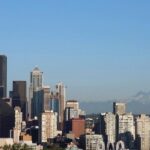
Even if you’re local, the route makes you slow down. From the boat, the Space Needle and downtown skyline aren’t front-and-center in the same way they are on land. You get breathing room for photos, plus that feeling of gliding past the city instead of fighting traffic or lines.
Other Seattle tours we've reviewed in Seattle
What happens during the 1.5 hours on the water
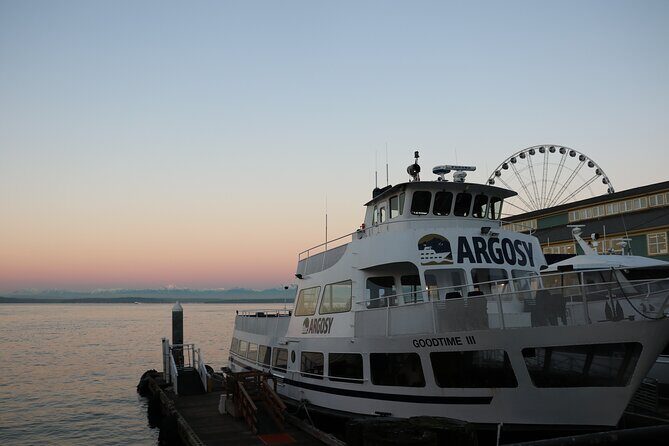
The cruise follows Elliott Bay and reaches into Puget Sound during golden hour. You’ll start at Seattle’s central waterfront and then work your way past piers, green space, major landmarks, and working waterfront zones.
It’s built for easy viewing. The boat has both indoor and outdoor seating, bathrooms on board, and a generally relaxed pace—so you’re not rushing between spots. The staff runs a tight schedule too: boarding starts before departure, and the vessel leaves promptly at the tour time.
Practical tip: if you care about photos, plan to spend most of your time outside near the rails when weather allows. The best shots tend to come while you’re moving, not while you’re stuck inside looking through glass.
Pier-by-pier skyline views: Great Wheel, downtown, and the waterfront “aha” moment
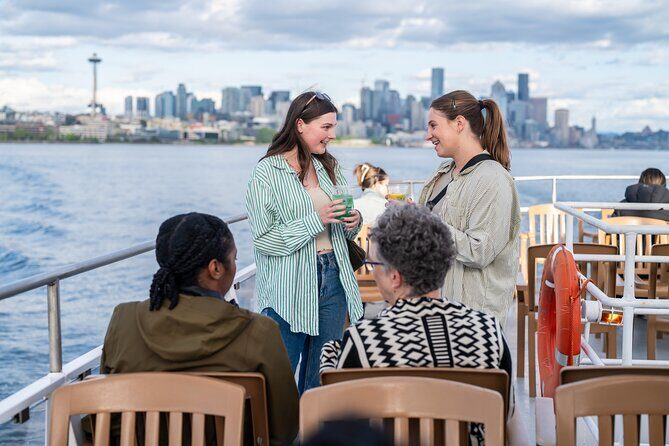
Your cruise starts from Seattle’s historic central waterfront, cruising by the piers and landmarks along the harbor. As you move, the city’s layout makes sense fast—downtown, major waterfront structures, and the way neighborhoods step down toward the water.
One of the early highlights is the view of the Seattle Great Wheel from Pier 57. Since it opened in 2012, the Great Wheel is now part of the skyline signature, and from the water you can see it in full, not just in partial angles. If you like skyline photos that show the whole scene—city and water together—this stop works well.
You’ll also pass areas near Overlook Park as part of the general waterfront sweep. The key value here is perspective. On land, you tend to pick one landmark. On the water, you collect many in a single sweep, and it’s easier to understand how close everything really is.
Myrtle Edwards Park: Seattle’s green edge from Elliott Bay
Later in the ride you pass by Myrtle Edwards Park, a small but meaningful chunk of green along Elliott Bay. It’s known for its 1.25-mile biking and pedestrian path with strong water-and-city views.
From the boat, that park feels like a boundary between two worlds: city density on one side, shoreline calm on the other. You don’t need to get off the boat to get the vibe, and that’s why this kind of cruise earns its keep—less planning, more payoff.
If you enjoy jogging, walking, or casual waterfront time, this part also gives you a shortcut for deciding what to do later. After the cruise, you’ll have a clearer mental map of where that coastal path runs and where the best views likely are.
The Space Needle photo moment you actually get on this cruise
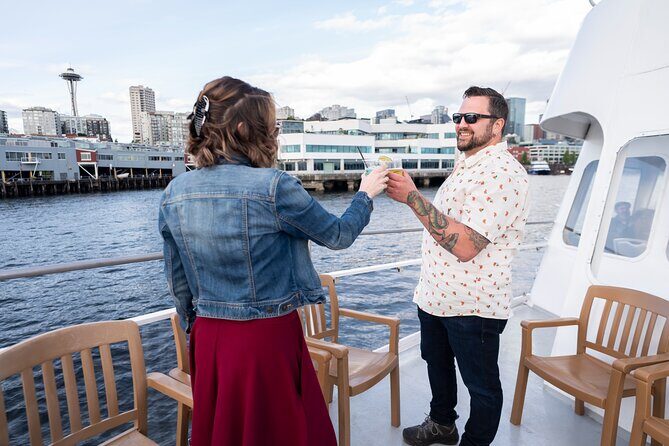
The cruise route is timed and positioned so you can photograph the Space Needle from the water. The view is described as unobstructed, and that’s huge for real photos instead of “almost got it” shots.
Here’s the practical part: when the Space Needle is in frame, you’ll usually want to be outside and facing the right direction rather than inside taking a “through a window” picture. If you’re with a group, this is also the moment to pick one person as the designated spotter while the others handle camera settings.
Also, the ride doesn’t just give you a tight landmark view. It lets you capture the Space Needle as part of the skyline—what Seattle looks like when the city is framed by water and mountain haze.
Other boat tours in Seattle



Terminal 91 and Harbor Island: the working-port side of Seattle

Not everything on this cruise is postcard-perfect. You’ll also see Terminal 91, a major cruise terminal where large passenger ships dock during cruise season.
From there, the experience shifts toward the working side of Elliott Bay and the Port of Seattle, including Harbor Island, described as the largest man-made island in the United States. You’ll see big container ships loading and unloading—industrial, yes, but also fascinating if you like how places actually function.
There’s even a history thread built into the experience. On at least some sailing times during cruise season, you may learn about Seattle’s ties to Alaska’s inside passage. It’s not a museum visit, but it adds context to why this waterfront matters beyond views.
Value check: this section is often what makes the cruise feel more “Seattle” and less like a generic sunset loop. You get city glamour plus real-world port operations in one ride.
Olympic Mountains, Puget Sound, and the Mount Rainier visibility gamble
Seattle’s best magic is the mountain backdrop, and this cruise uses that. As you cruise around Elliott Bay and Puget Sound, you can see the Olympic Mountain Range across the water. On a clear day, you might spot snow-capped peaks in the distance, which can make the skyline look even more dramatic.
The cruise also goes along views of Puget Sound, described as an inland estuary about 95 miles long between the Olympic Peninsula and the Seattle metro area. If you’re the kind of person who loves wide “Where am I right now?” geography moments, this part does the job. You get city + nature in one glance, without changing locations.
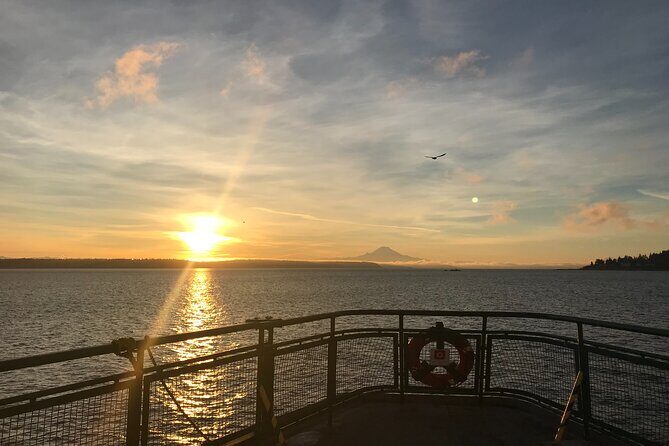
Then comes the big-weather payoff: Mount Rainier. If conditions are right, you can catch a view of the 14,410 ft volcano about 60 miles southeast of Seattle (also commonly called Mount Tahoma). You won’t control the weather, so treat this as a bonus, not a guarantee.
If you want the best odds, plan for daylight and keep an eye on the sky. When clouds clear even a little, Rainier can pop into view fast.
Alki Point Lighthouse and West Seattle from the water
As the cruise continues, you’ll head toward West Seattle and the Alki Point Lighthouse area. The lighthouse is described as a fully functioning, automated aid-to-navigation and an active US Coast Guard site with history reaching back to the 1800s.
This is where the cruise shifts from “big skyline” to “Seattle shoreline story.” The lighthouse gives you a specific landmark with personality, and the waterside view around Alki Point tends to feel more open than the denser downtown stretch.
Practical photo tip: lighthouse shots and shoreline shots usually benefit from being outside, steady near the railing, and quick with your timing. You’ll get a passing-window feel, not a long stationary moment.
Also, West Seattle adds variety. Even if you’ve heard about it, seeing it framed from the water helps you understand how the neighborhoods connect to the harbor.
Onboard vibe: seating, restrooms, and the reality of bar lines
This cruise is set up to be comfortable. You’ll find both indoor and outdoor seating, and the boat has bathrooms. One review highlighted clean, spacious restrooms and a comfortable, roomy feel on the Argosy vessel—exactly the kind of practical comfort that matters for a 1.5-hour outing.
You should also expect a bar onboard where food and drinks can be purchased. Some passengers mention good cocktails and snacks, plus the option to keep it simple with just a drink and a view.
A heads-up: some people experience the seating as tight or crowded, especially at popular sunset times. In certain departures, chairs can be arranged in ways that make it harder to face the water rail for long periods. If you care about “standing at the rail and watching,” you’ll want to claim your spot early.
Weather tip that keeps coming up: bring a jacket. Even in summer, the water breeze can cool you down after sunset.
How much is this $57.42 worth for your Seattle time?
At about $57.42 per person for a 1.5-hour cruise, the value depends on what you want most: views, time saved, or minimal planning.
Here’s how I’d judge it:
- If you want a single activity that delivers multiple major landmarks (Space Needle, Great Wheel, Alki Point Lighthouse) without hopping around, it’s solid value.
- If you hate waiting in lines or moving between neighborhoods, the cruise format makes it efficient.
- If you’re very narration-driven and want lots of structured commentary, you may feel the experience is lighter than expected.
The narration approach is the dividing line. The experience is described as having minimal onboard narration, which is great for relaxing and socializing. But that also explains why a small number of passengers asked for more site commentary—because they were hoping to learn more as they pass each landmark.
So treat this as a scenery-first outing. You’re paying for the water views and the calm, not for a full museum-style talk.
Who should book the Seattle Summer Views Cruise (and who should consider alternatives)
I’d book this if you fit one of these buckets:
- You want sunset views without intense planning or long transit.
- You’re traveling with people who enjoy social time more than lectures.
- You like skyline photos and lighthouse shoreline angles.
- You appreciate both city landmarks and working waterfront scenes.
I’d think twice if:
- You really want heavy narration and lots of explanations at each stop.
- You’re sensitive to crowded indoor seating at peak times.
- You’ll struggle with split-point ticket conversion timing. One passenger had trouble converting a voucher at a separate pier and missed departure due to mobility challenges. If you have limited mobility, give yourself extra time and plan around the fact that ticket redemption and departure points differ.
The cruise is also best for people who can enjoy “passing views.” It’s not a stop-and-stroll tour. It’s about what you can capture and take in while the boat moves.
Should you book it or skip it
Book it if you want a smooth, low-effort Seattle evening with great water views, a likely shot at Mt. Rainier when weather cooperates, and a chance to photograph the Space Needle from the harbor.
Skip it (or consider another style of cruise) if you know you’ll be disappointed by lighter narration. For a narration-heavy experience, you’ll likely feel better choosing a tour that’s designed to explain every major stop in depth.
If you do book this one, here’s your best move: arrive early, dress for wind, and plan to spend time outside for photos. This cruise is all about the scene you get while you’re moving through Elliott Bay and Puget Sound.